
Janet Tang
Partner & Managing Director


Since the launch of the iPhone in 2007, smartphones have remained the dominant personal computing device despite waves of innovation via new form factors. Some of these have pushed the boundaries of the smartphone category (e.g., "phablets” and foldables) while others have created niches of personal computing (e.g., tablets) or enhanced the mobile experience (e.g., headphones, smartwatches, and smart rings). Others failed, at least initially, to gain traction and become widely adopted devices (e.g., smart glasses and VR headsets).
With the rise of AI and its impact on personal computing, will we now see challengers emerge that cut into—or eventually upend—the smartphone’s dominance?

Before we dive-in, we’d like to introduce a few dimensions to evaluate various hardware form factors against:
Functionality: Evaluates computing power and the sheer volume of use cases supported by each device. Over the years, this dimension has evolved towards ability to compute real-time on edge devices with extended battery life.
Interactivity: Evaluates how seamless and hands-off humans could interact with the hardware devices. As sensor technology advances, this dimension will evolve towards devices’ ability to augment the five senses humans have, while offering a seamless, interactive and intuitive user experience.
Mobility: Evaluates how mobile each device is, including ability to be carried around, portability, and lightness. However, as devices and new form factors are all mobile, this dimension is also becoming less relevant with time.
Smartphones became the dominant device because they are the perfect form factor for critical, converging use cases—calls and texts, PDA (personal digital assistant), music player, compact digital photo and video camera, and PC. As the mobility-functionality frontier expanded, the smartphone took over more use cases, unifying key functions such as work communication as well as productivity and entertainment across social media and video apps. Crucially, it provided the above with superior portability and relative affordability compared to other devices that combine only a few of these use cases.
But now, with the introduction of AI, we’re witnessing devices quickly evolve to better incorporate AI (see The emergence and user demand for AI PCs). What held true for consumers historically started to evolve. Nowadays, consumers are eager for context-aware intelligence (e.g., wearables) that are not only portable and lightweight, but also offer strong computing power, extended battery life, and most importantly, seamless interactivity by sensing our surroundings and freeing our hands. And that’s when we see the emergence of various new form factors, including smart glasses, AI companions, and the like.
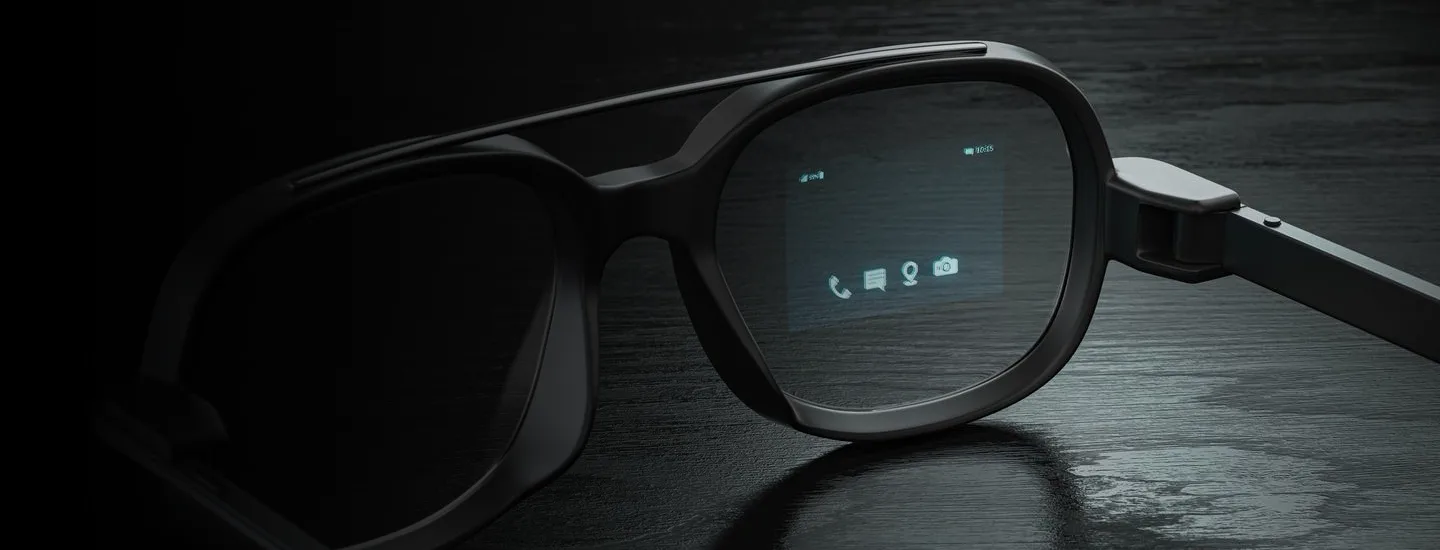
Of all the new AI form factors, smart glasses seem to be leading the race due to their interactivity potential: They hear what you hear, see what you see, answer back, display information, and are literally in touch with you at all times (so they can collect data). With a wristband, you can use gestures to give your glasses commands, rather than talking to them. Smart glasses also have the advantage that they build on existing products (prescription glasses and sunglasses), leveraging consumer habits to drive adoption.
Given their potential to enable the next paradigm of personal computing, it’s not surprising to see that the race has already started. Meta and Amazon have already launched theirs while Google, Apple, and Samsung, among others, are expected to launch their own in the next few years.
With time, we expect other form factors such as AI companions and robotics to emerge as well. AI companions will be context-aware of a user’s surroundings, sitting in your pocket or on your desk to complement existing devices like smartphones. Both OpenAI (potentially a Smart Pen positioned as a “third core device”) and Apple (AI pin) are reportedly working on variants of the AI companion.
The new paradigm of personal computing will depend on technology and business factors. On the technology side, the battleground is as much about AI superiority as it is about developing a superior experience via a new AI form factor. On the business side, players are competing to own the ecosystem and reach scale first.

We see three potential scenarios for the personal computing’s new paradigm:
Scenario 1 is largely the path we’re on right now, with new hardware form factors emerging to disrupt the ecosystems smartphone manufacturers have built. However, most new form factors still require an external source of computing power, such as a smartphone, to fully realize their potential.
Scenario 2 is when new form factors are no longer dependent and truly become standalone, hence creating their own ecosystem. To achieve this, substantial R&D is required to fulfill the vision and ensure the glasses (or similar devices) can sense surroundings and offer a seamless user experience when interacting with both hardware and apps.
Lastly, scenario 3 envisions a world where it’s the AI that commands consumer loyalty, and the brands of the hardware no longer matter. This will likely drive enhanced competition in the SW / OS space, and leave hardware players prioritizing features, design, and user experience to differentiate.
Each scenario has implications for ecosystem participants, which need to adopt a different strategy based on the scenario that they believe in. Hedging strategies are also possible.
At a high level, the strategies that align with the three scenarios we outlined above are as follows:
If we are still smartphone-centric after a new AI form factor becomes mainstream, industry players need to be early in the Android ecosystem to build the new factor (e.g., smart glasses, which we will use as an example in Figure 4 below) that enhance the phone experience.
If new AI form factors become standalone devices, competitors will race to partner with leading companies (e.g., Meta) to build standalone devices.
If the hardware brand is less important than the AI itself commanding consumer loyalty, companies will need to be early in the AI ecosystem to build the devices that best utilize leading AI platforms.

As of today, we are just seeing the early signs of the paradigm shift. While we think that smart glasses will be the leading form factor, there really isn’t a clear winner on the horizon. And for whichever form factors gain traction, the battle is not only to launch a product that satisfies consumer needs and wants, but also to win in the “aftermarket.” Those that effectively iterate product development by pushing out new features and continuing to meet and exceed consumer expectations (all the while offering a seamless user experience and customer support) are the ones that will sustain their advantage.
At AlixPartners, we specialize in helping companies navigate disruption. We have extensive experience working with clients to realign strategies and resources to address the challenges and opportunities of a paradigm shift.