People

Esben Christensen
Partner & Managing Director, Head Turnaround & Restructuring, United Kingdom
London


The European chemicals industry faces a challenging landscape through to 2029–2030, according to the latest industry forecasts. Despite hopes for a cyclical rebound, sentiment is now leaning toward a structural shift rather than merely part of the typical cycle.
There are four key issues currently facing the European chemicals market:
1. No let-up in global overcapacity
Recent capacity additions, especially in Asia, have pushed operating rates down towards 70%[1] in many European countries, far below historical averages. The signs, however, are that limited recovery is expected this decade.
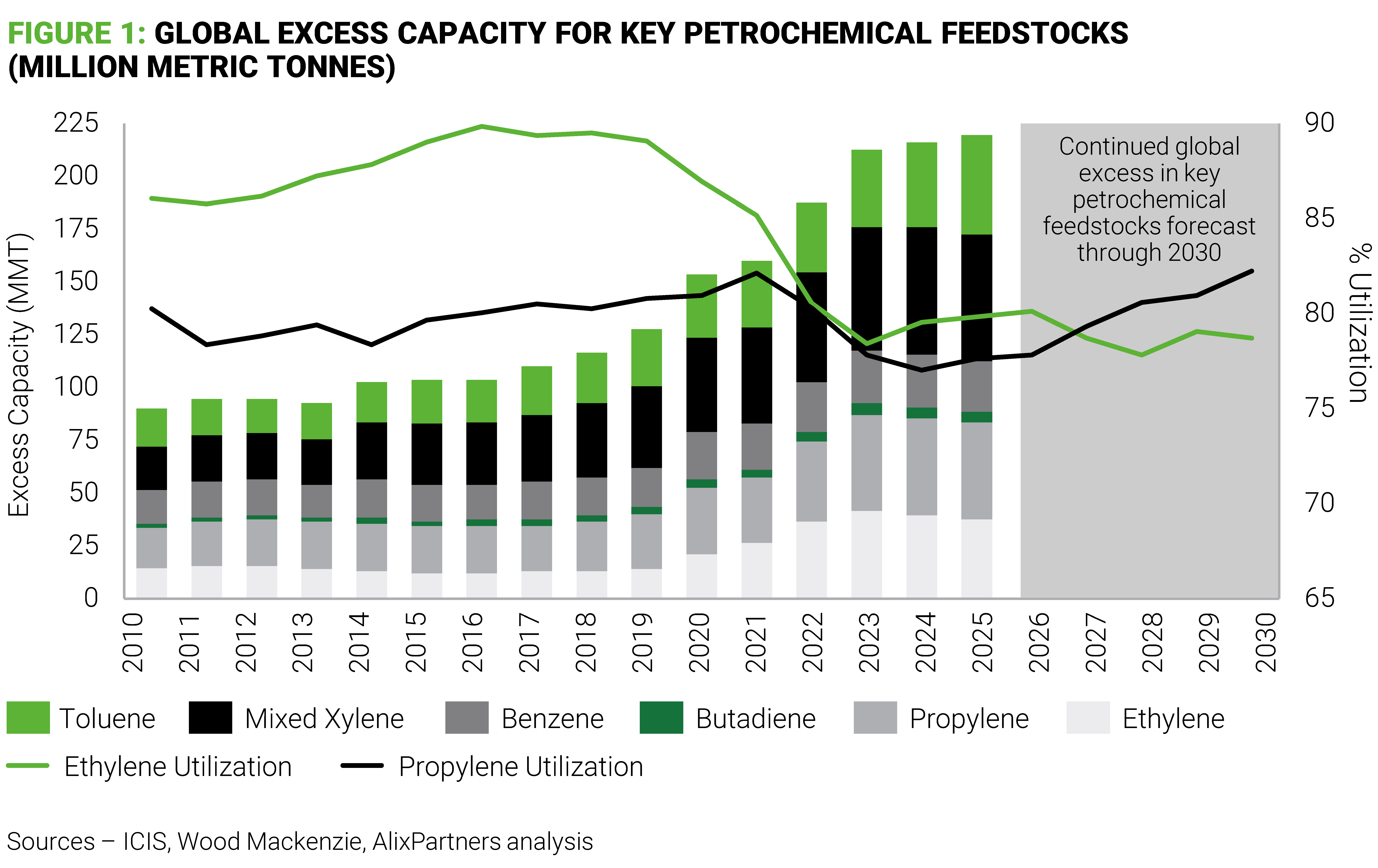
Four new ethane-fed crackers (4.15 MMt/y combined) coming online in Asia and Europe by 2027 will lower feedstock costs while further expanding overall supply. Further global cracker capacity expansion like this will drive the need for plant closures, especially assets in high-cost regions such as Western Europe and Northeast Asia. Japan will retire three naphtha crackers by 2028, while South Korea targets 2.7–3.7 MMt/y of capacity reductions under government restructuring.
Global overcapacity of basic chemicals is not expected to recover through 2030, impacting price and adding to margin pressure.
Beyond commodities, China is now rapidly scaling speciality chemicals production, with double‑digit export growth since 2021. This expansion is eroding traditional Western advantages based on differentiation and technical intimacy. In response, speciality players increasingly require faster innovation cycles, clearer commercial discipline, and stronger service models to maintain competitiveness.
2. Stagnant end-market demand
Downstream sectors heavily reliant on chemicals, such as automotive, construction, and consumer goods, have contracted across the Eurozone, creating a negative ripple effect across the chemicals landscape.
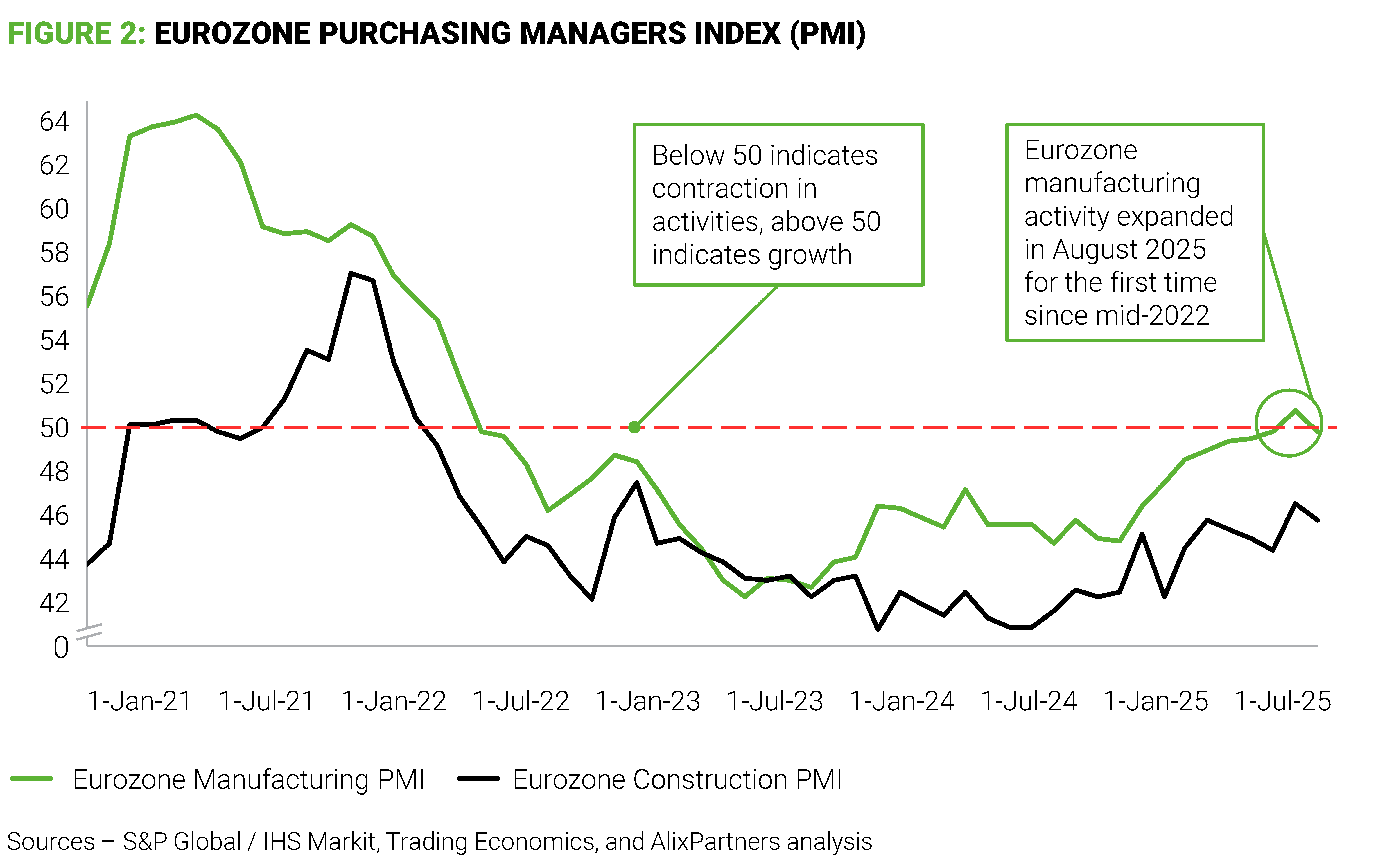
Respite appears limited in the medium term, with the Euro Zone Manufacturing PMI projected to trend around 51.50 points in 2026 and 52.00 points in 2027, so chemical producers can only expect a gradual, modest recovery at best.
3. Structural cost disadvantages
Europe’s reliance on natural gas imports means producers face power costs that can be 3-4x higher than in the U.S. and Asia. This, coupled with the higher cost of regulatory compliance in Europe, yields structurally higher cost bases and eroded price competitiveness compared to global counterparts.
European chemical industry players exposed to more energy-intensive production processes (e.g., Titanium Dioxide, isocyanates, polyamides, etc.) are even more likely to face higher levels of stress if European energy cost disadvantages persist.
These chemical product groups also coincide with relative ease of product transport, which facilitates imports from outside the Euro Zone and creates even more elastic demand and price competition.
4. Balance sheet and liquidity pressure
Sector leverage has risen in the wake of underperformance, and the ongoing negative outlook creates refinancing risks for the upcoming sector-wide maturity wall by 2029. Declining liquidity across much of the sector compounds the issue and hinders investment in business turnaround.
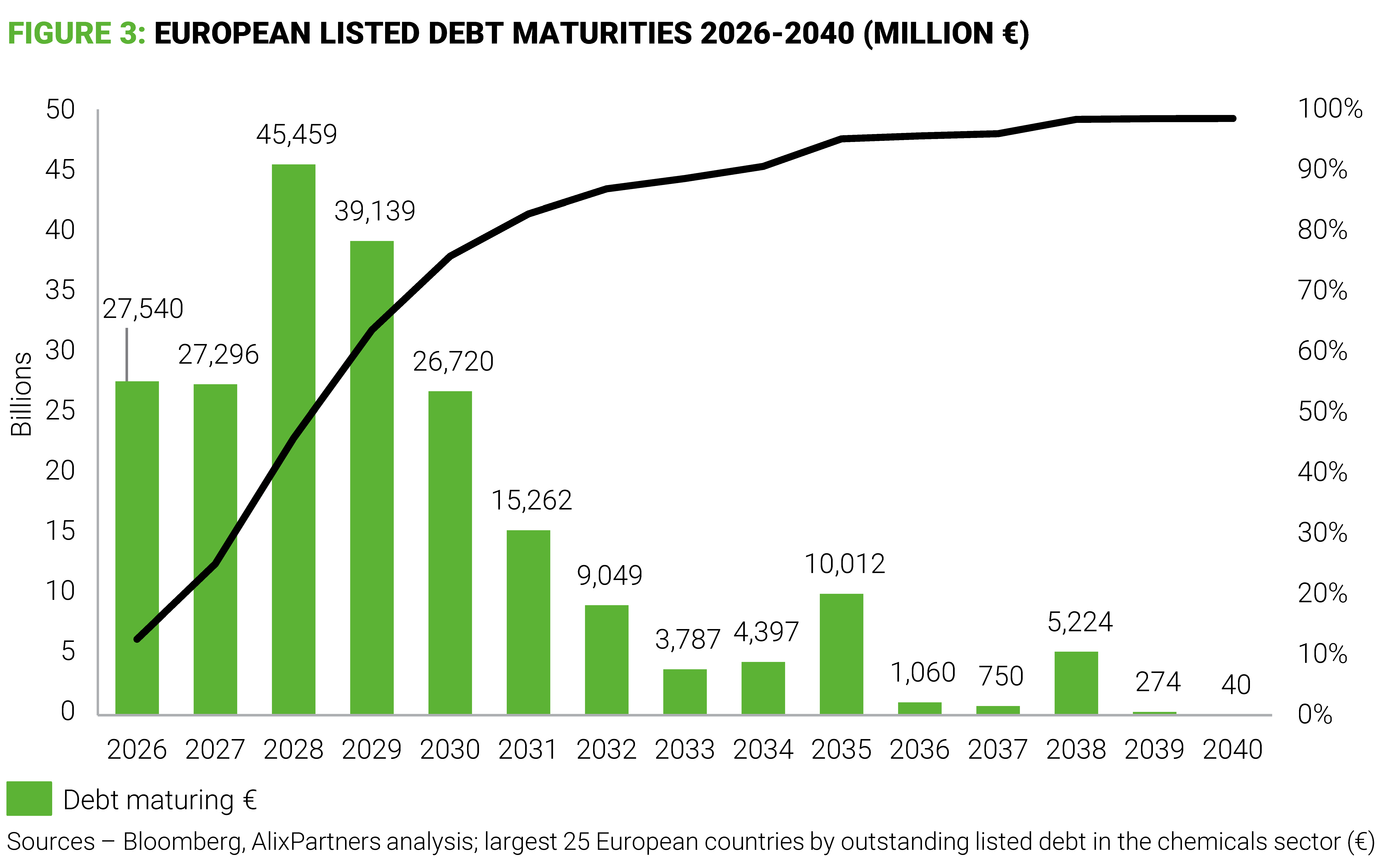
Borrowers and issuers of listed debt, most of which matures before 2030, will be refinancing during a period when leading operational indicators in both supply and demand are still expected to be down from historic levels.
Market sentiment and valuation multiples are likely to factor into this dimmer outlook, which in turn affects pricing, transaction values and volumes, and strategic options.
So, what next?
The European chemicals sector faces sustained pressure, making timely restructuring essential. Analysis indicates that the sector is not merely in a cyclical trough, but in a structurally prolonged downturn. Successful companies will act early, recognising that market headwinds will persist and that inaction erodes value. A clear, reset strategy and business plan are needed to address underperformance and position the business for future resilience.
Engaging stakeholders – especially lenders – builds trust and supports a credible turnaround. Rigorous liquidity management and a strong cash culture are vital to understanding the runway and the delivery of the plan.
We’ve already seen several chemical businesses take proactive action and provide examples for peers to follow. Across the wide range of practical levers available, we highlight three which we are most likely to benefit those under stress:
If you or your clients are interested in any of these topics, please reach out to a member of our chemicals team listed below, and we’d be very happy to discuss.
[1] Oxford Economics