Catherine Nekavand
Partner - New York


Beauty’s biggest spenders have a number of smaller concerns—fine lines, loss of collagen, hormonal shifts—and one glaring one: the vanishingly small corner of the industry that actually caters to them.
Gen X (born 1965-1980) shoppers spent an average of $2,276 on beauty, health and wellness products (excluding services) in the last 12 months, 16% more than other consumers, per Numerator, and will remain the top-spending generation for at least the next eight years. Yet when they enter beauty/health/wellness (BHW) stores, they are met with merchandising and marketing that is increasingly geared toward some of the youngest consumers—shoppers who not only are contraindicated for many actives (retinol), but many of whom still see a pediatrician.
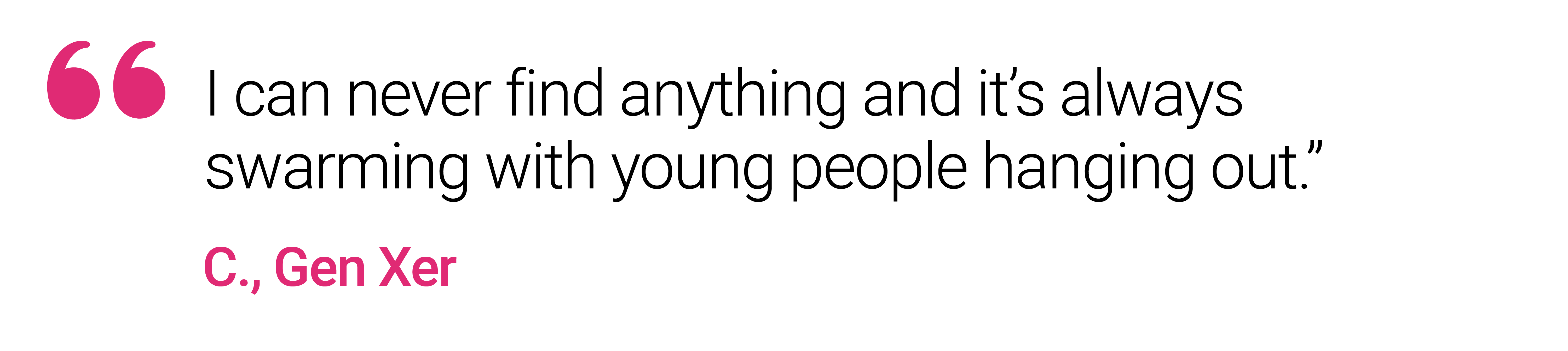
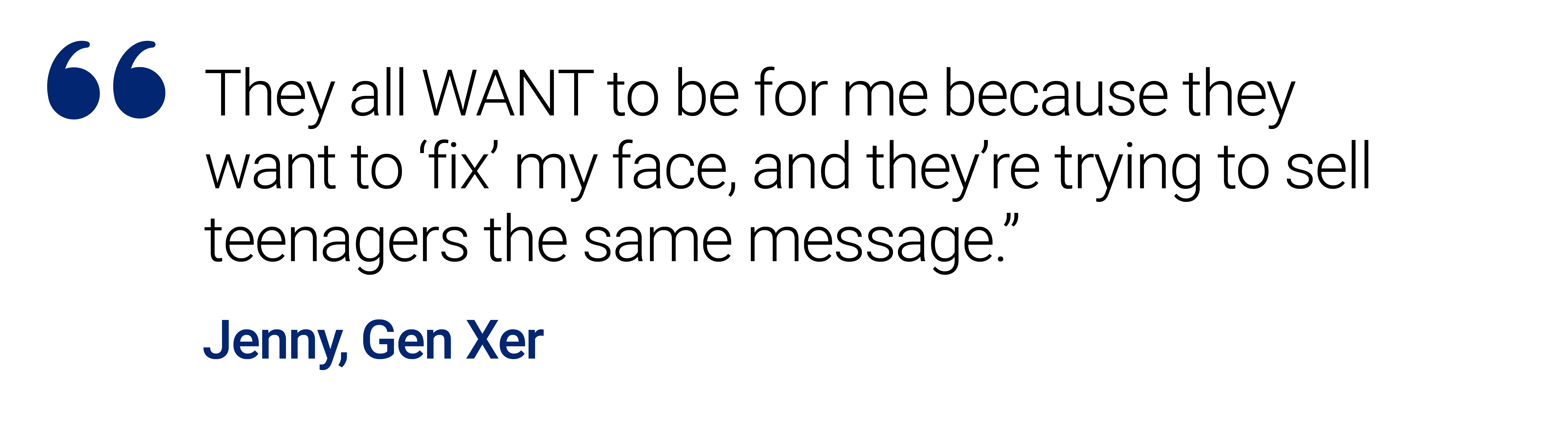
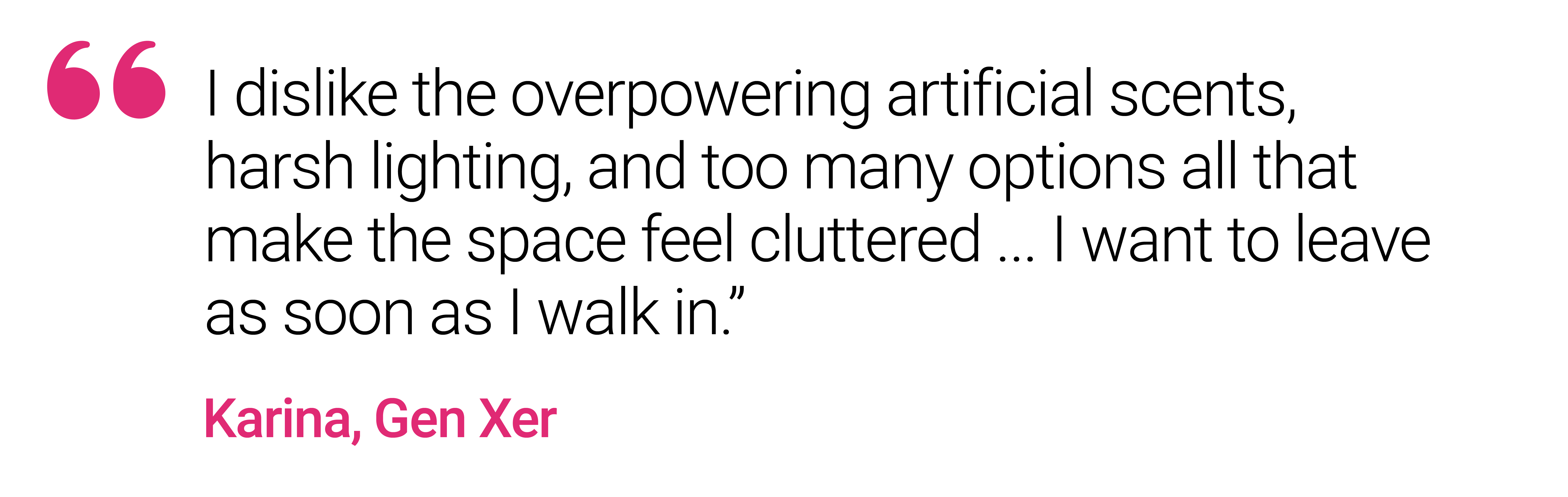
In contrast, their Gen X counterpart is at the peak of their earnings, has an army of holistic and medical professionals on deck to advise on BHW regimes, and is increasingly invested in finding services and products worth their time, money, and wisdom (particularly in prestige). They don’t want teen Salish Matter’s Gen Alpha products, they want Bobbi Brown herself to get real about the aging aesthetic. They dislike the artificial scents, harsh lighting, and constantly refreshed layout of many shops. As one Gen Xer told us, the average beauty store doesn’t feel like it’s for her, “unless it’s curated like a gallery and doesn’t feel like a supermarket.”
This disconnect presents a huge opportunity. Companies who can find the agility required to move past the bright lights of influencer marketing and newness-focused merchandising toward a more inventive business model that places curation, education, and connection at the center stand to gain a lot. The younger half of Gen X (aged 45-54) has increased their spend on personal care by 47% since 2020, while the older half of Gen X (55-63) has increased their spend by 63%, per St. Louis Federal Reserve data. And they’ve got inheritances yet to come.
The plot twist is we believe the current model won’t serve other generations as they age either—like a sudden loss of suppleness, the backlash to attention-economy-maxxed hype cycle and tech-enabled e-commerce fronts is coming sooner than you might think. Companies have a lot to learn from the appetites of the savvy Gen X shopper.
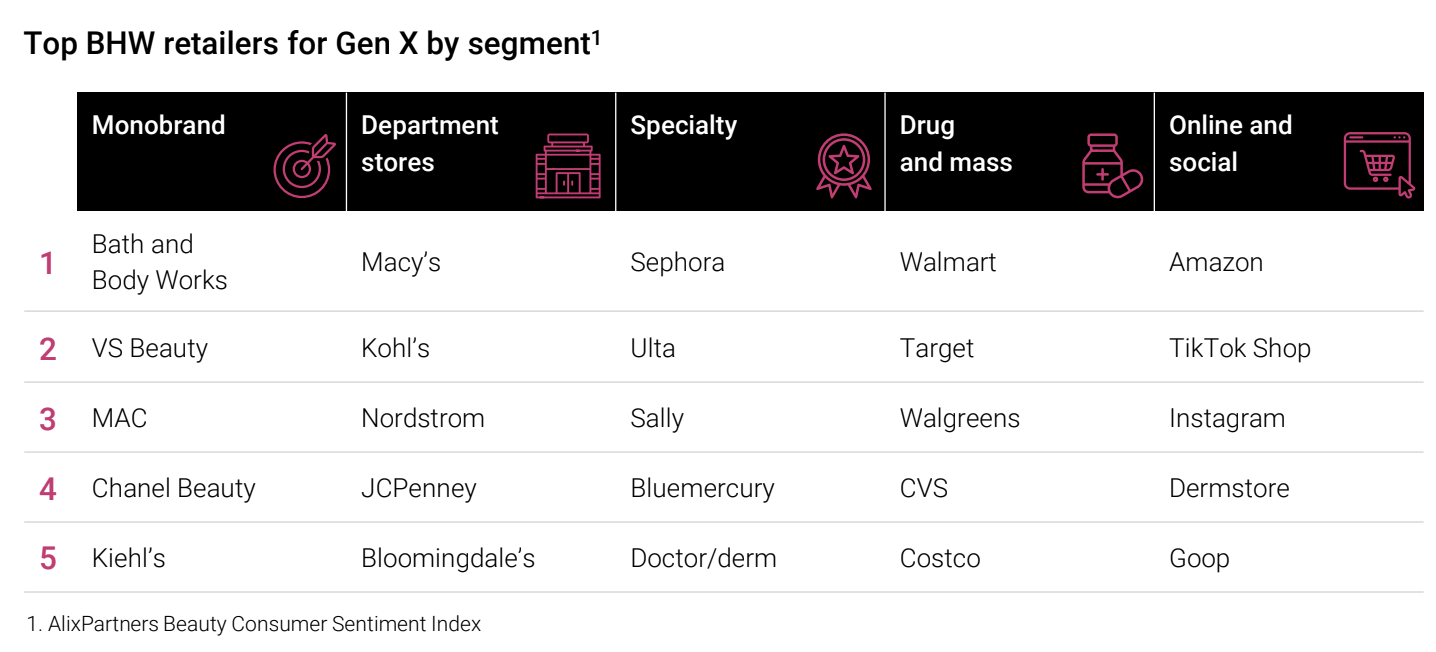
To understand what they want, and where they’re being left out in the cold, AlixPartners surveyed over 1,000 Gen X shoppers for the Consumer Sentiment Index, finding that the generation was an outlier in terms of their areas of focus and preferred retailers. Here, we lay out their biggest wants and reveal the brands winning in the sector.
Young enough to be keyed into emerging brands but old enough to appreciate the original gal pal of the ‘80s beauty counter, Gen Xers head to Macy’s as their preferred department store; the business model may be struggling but the perks and the connections are alive and well. Service has increasingly been automated, and focused on digital discovery, but Gen X are driving a reimagination of the informed customer-adviser relationship.
Within online and social channels, the primacy of Amazon points to a consumer who knows what they want and is price-shopping and using retailers for search, rather than waiting to feel inspired by influencers in TikTok (which comes in second for online by the harder-to-impress MTV Generation).
Though Sephora still remains the dominant player, other specialty companies are coming for the Gen X vote, and the industry as a whole is starting to pivot toward its spendiest demo. Ulta is leaning into wellness and catering expressly to hormonal transitions, while Bluemercury is banking on elite curation and 1:1 clienteling. All the companies we discuss are looking at how to capitalize on the convergence of beauty, health, and wellness in recent years (Gen Xers are the first to tell you it’s all connected).
The goods, not an influencer
Gen X know their concerns (they had their “zones” read back in the ‘90s, and want to jump to actives and efficacy already), so they’re not in-store or online to see what a celebrity’s latest commerce play is; they want products that work, that are high-quality, and that leave out unnecessary fragrance and add-ons.
Our research shows that Gen X researches and deliberates; brands and retailers winning with this cohort give them content-rich, low-pressure environments (shoutout to Bluemercury, which gives shoppers additional time to strategize purchases with concierge services after the visit, as well as to the churchlike calm of department stores, and the Reddit-like information trove offered by Amazon’s user reviews and price points).
Regarding influencers tapping mysterious tubes that may or may not be dupes or do what they advertise, Gen X aren’t interested in the name-brand of it all. Millennials care about brand resonance 41% more than Gen X. In fact, their scores drop sharply from other generations on brand identity, social commerce, personalization, and subscription models. That said, influencers who can speak to the specific concerns of Gen Xers sometimes find their fans will follow them anywhere—take note of the requests for product details in the comments of And Bloom’s Denise Boomkens or Trinny of London’s Trinny Woodall.
"Newness doesn't work on Gen X the way it works on Gen Z, because Gen X have seen a million and one fads come and go,” says Jodi Katz, CEO of Base Beauty, which advises BHW companies on social strategy, PR, and creative. “They understand the taste economy—loyalty to select brands for the long haul as a way to self-define—better than anyone. Identity is cumulative, and effective marketing doesn't try to sell them products, it positions brands within the wider culture. Over time, that creates a sense of gravity for winning brands."
One company doing influence right is U Beauty, which is differentiated from other beauty companies in that it uses a measured release calendar and runs traditional advertising in print publications such as The New York Times, The Wall Street Journal, and New York Magazine. This strategy resonates with Gen X, who does not appreciate the incessant newness and releases that is starting to rival fast fashion’s calendar.
Curation over crowding
Gen X scores "knowledgeable sales associates" notably higher than do Gen Z and Millennials (one of the biggest gaps from our 2025 Consumer Sentiment Index) across all channels, while "feeling connected via influencers/social trends" scores relatively low. One of the standouts in service is Bluemercury.
The Macy’s-owned beauty chain is emerging as a winner as they focus less on showcasing newness and avoid trying to sell everything under the sun. Rather, they are providing true curation of the best products on the market and 1:1 clienteling to support education and connectivity. Their net sales are up largely due to the 40+ consumer, and the company recorded its 19th consecutive quarter of comparative growth in Q3 2025, as part of Macy’s “Bold New Chapter” strategy. In some ways, they’ve picked up where Goop’s (#5 in online) expensive but elite curatorial efforts left off.
The other brand that has taken a clear lane is Jones Road Beauty. Their minimal, fuss-free makeup experience resonates with Gen X, who are responsible for half the brand’s ~$150 million revenue, per an interview the brand gave to Business of Fashion. This, despite (or because of) a choice not to sell through specialty; Jones Road have intentionally opened storefronts that allow people to work with makeup artists and touch the products.
Founder Bobbi Brown built her first brand inside the traditional retail system and learned what it costs. Her newer venture embodies CSI data insights showing Gen X's premium on knowledgeable associates and unhurried purchase decisions.
Get to the ingredient list
"Clean ingredients" and "detailed ingredient information" consistently rank in the top 2–3 product attributes for Gen X. This maps directly to the anti-aging and hair loss story: they're reading labels, not just brand names.
Added to sundry concerns that crop up with age, virtually the entire Gen X female population is currently in perimenopause, menopause, or early post-menopause. This keys in a specialized suite of BHW concerns, and is fueling rapid growth in the space, with some estimates putting the U.S. menopause market at $5 billion in 2025 (per Grand View Research, noting that the problem with menopause is a lack of definition and dedicated treatments that flow on down to analysis of the category).
Ulta has merchandised menopause care specifically with brands such as Stripes, Joylux, and Womaness, and there’s clearly a need to be set apart from youth-oriented products further—not just because Gen Xers want to avoid sulfates and physical exfoliants, but because, aesthetically, the teen vibe is a lot.
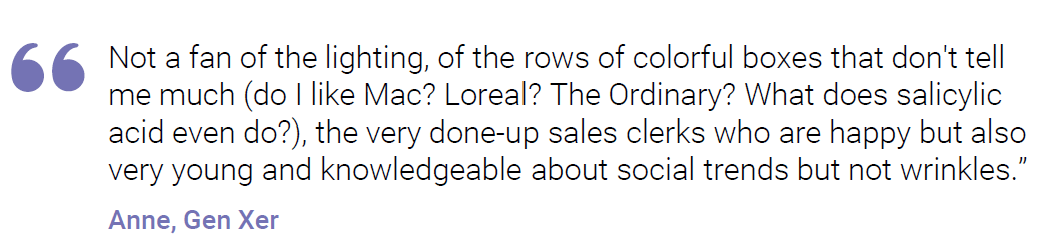
Also nailing the focus on efficacy? Sarah Creal Beauty, which was designed specifically for “advanced skin” concerns (such as fine lines, wrinkles). The most explicitly Gen X-positioned brand at retail right now, Sarah Creal was founded by the co-founder and former CEO of Victoria Beckham Beauty, with a résumé including Bobbi Brown, Tom Ford, and Prada Beauty. Creal’s "BABES 40+" imagery at Sephora offers one of the more direct age-inclusive positioning statements in prestige beauty.
Price consistency over discounts
Gen X are much more interested in price consistency than dupe products and buy-now-pay-later options. In short, they want reliability, not a deal chase. (And their credit cards are doing some of the heavier points-lifting anyhow.)
The horse race between specialty meccas Ulta and Sephora splits along the lines of product (won by Sephora) and access, service, and price (dominated by Ulta). This supports other data points showing Gen Xers index heavily on the quality of the product itself—with Sephora managing to edge ahead on exclusive partnerships—and that access is a powerful determinant. Ulta’s map of outlets trends slightly more suburban than Sephora.
Free & fast shipping is the single highest service attribute across all three channels among Gen X: they use e-commerce to restock efficiently, not to discover.
The relationship, and a place to belong, not a club card
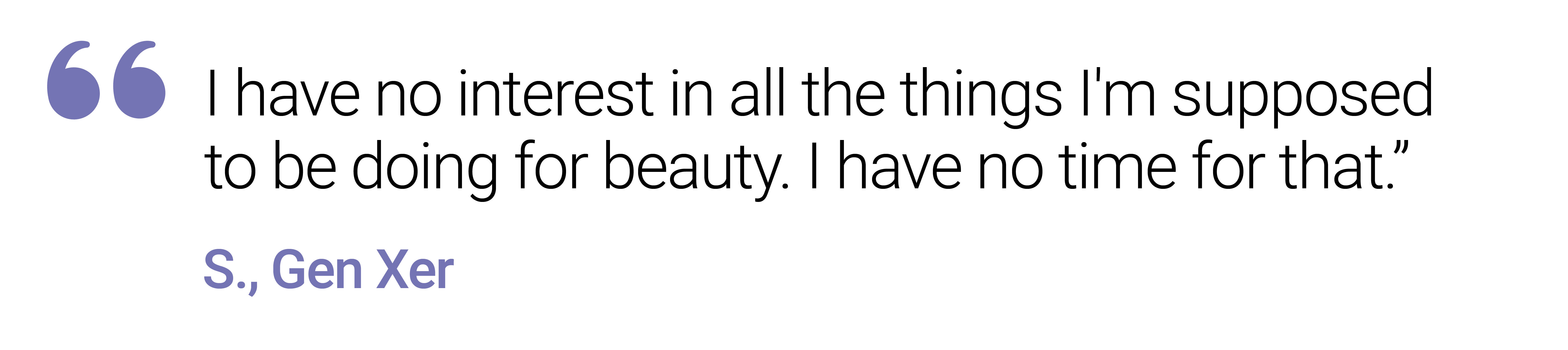
Gen X over indexes on loyalty programs comparatively, the most likely generation to agree that "loyalty program motivates me to centralize purchases." Gen X wants one relationship with a retailer, not a points scatter. This is a direct brief to Ulta and Sephora on their Gen X retention strategy.
Sephora is ranked by Gen X as the #1 specialty retailer for product (the one domain it narrowly edges Ulta), driven by their broader and deeper assortment in clinical prestige skincare, where Gen X concentrates. In addition, the Beauty Insider's points + tiered benefits + exclusive events model hits Gen X's stated loyalty priorities.
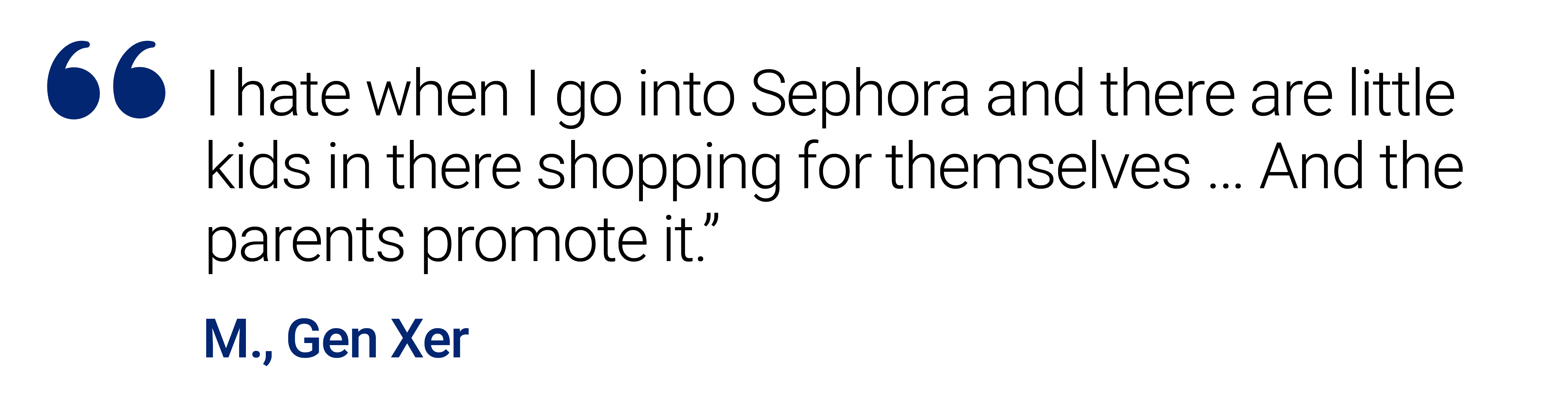
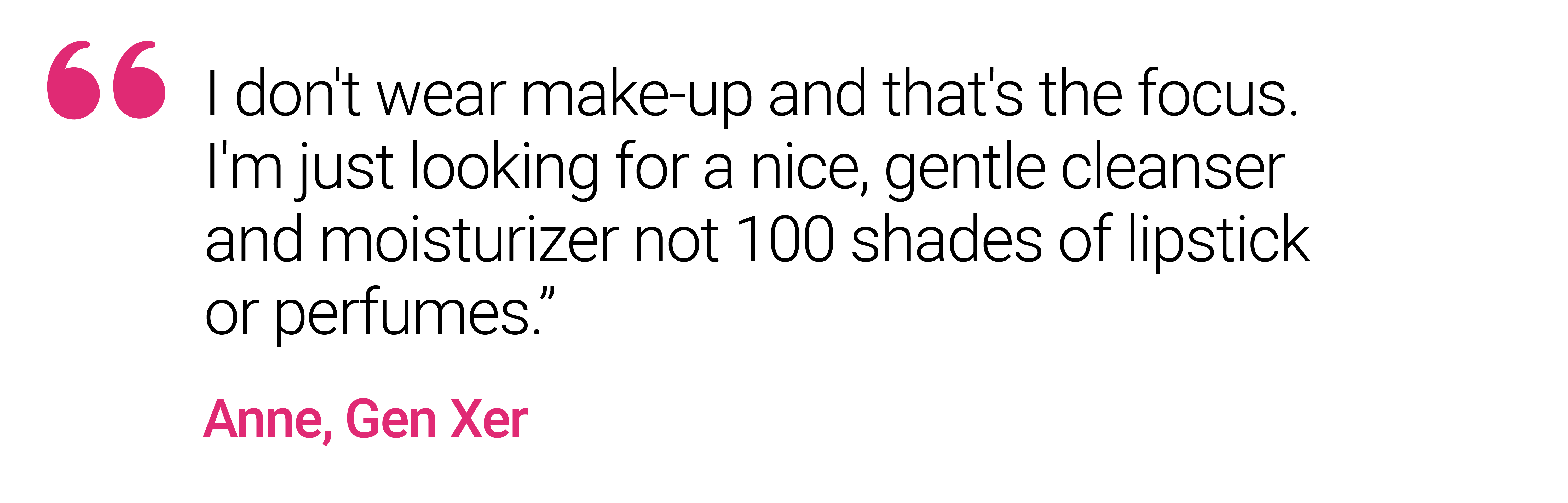
From the product assortment to the staff to the chance to experience and learn, the sum of the parts conveys to Gen X shoppers whether or not they belong, and whether this company is where they want to spend their money.
There are contradictions baked into the formula here. Inherent in in the BHW industry is a reverence for youth and some disdain for aging. Today, we are inching towards age positivity, or extending (and improving) lifespans, but the narrative is confused. The Gen X consumer came-of-age with lemon juice highlights and SPF12, and is now at nearly their spending peak, with an interest in skincare, supplements, cosmetics, and services that make them feel good. Yet when they browse the supermarket beauty aisle, they’re taunted by the return of blast-from-the-past Sun-In.
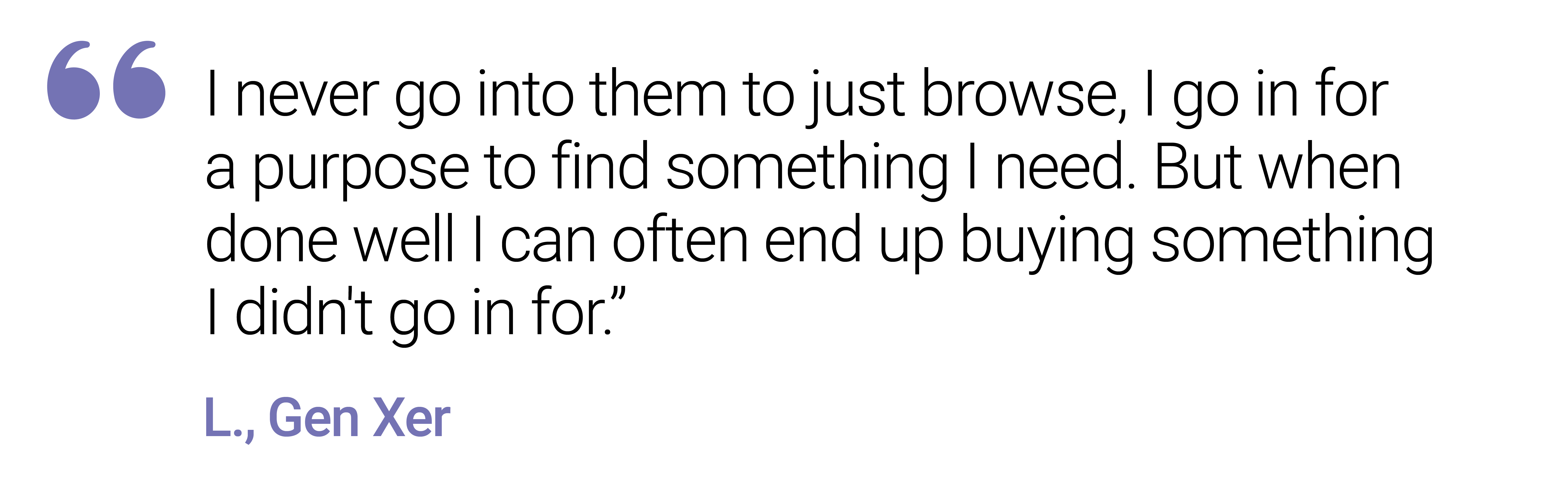
Science is moving on menopause and longevity, but there’s a profound messaging problem. Gen X-oriented beauty brands are invisible to the wider population, just as Gen X shoppers seem nearly invisible to youth-oriented beauty emporiums. The one-stop-shop, all-your-concerns-solved, beauty minis, bright light of Hollywood-style beauty emporium is set up to serve everyone, but winds up limiting its penetration among a key demographic.
Maybe it’s time to learn from the smartest beauty consumer out there.
Sourcing: Consumer Sentiment Index fielded summer 2025, year of birth 1965-1980, n=1,000. Gen X quotes solicited online March 2026.