
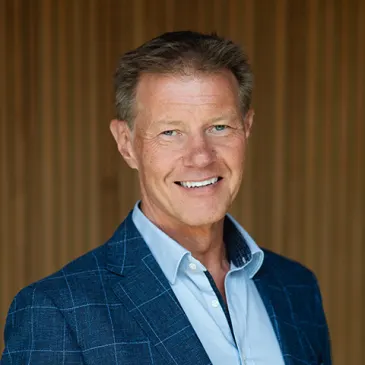
Matt Clark
EMEA Leader, Retail, Partner & Managing Director
London
Matt Clark
Partner & Managing Director - London


In this fourth episode of the 2026 World Retail Podcast series on Unlocking volume growth, Ian McGarrigle, Chair of World Retail Congress, is joined by Rami Baitiéh, Chief Executive Officer of Morrisons, and Matt Clark, EMEA Retail Leader at AlixPartners, for a wide-ranging conversation on growth in one of retail’s toughest sectors. Together, they explore what it takes to unlock like-for-like growth in grocery, from fixing the fundamentals and improving productivity to using data, technology, and differentiation to stay competitive.
Listen to the episode on Spotify or Apple, or read the transcript below.
Ian McGarrigle:
Today’s interview will focus on grocery, one of the most competitive retail sectors, and we’ll examine how retailers can drive growth.
To help us understand what is happening across grocery retailing, Matt and I are joined by one of the most experienced retail leaders in the sector, Rami Baitiéh, Chief Executive Officer of Morrisons, the U.K. retailer with turnover of £15.8 billion in financial year 2024–25 and more than 2,000 supermarkets and convenience stores.
Before joining Morrisons in 2023, Rami led country operations for Carrefour across Europe, Asia, and South America.
Grocery has to be one of the most competitive sectors in the world, in any country. So, Matt, I’m keen to get your thoughts before we introduce Rami on the challenges you see facing grocery retail specifically as retailers look for that all-important growth.
Matt Clark:
Hi, Ian. Great to be here.
I’m very excited about this conversation. I think it will be fascinating. As you say, grocery is extraordinarily competitive. On one hand, of course, it has the advantage that everyone needs to eat, so there is a certain guaranteed volume.
But especially here in the U.K., margin pressure driven by cost inflation, particularly around people, and also very cautious consumer intent mean that it is unbelievably difficult to actually achieve market share growth and therefore deliver the productivity improvements in a business that create sustainable profit.
So I think, for many retailers here in the U.K. and much more broadly around the world, some of the lessons learned from the U.K. grocery industry—and how to think about driving that all-important like-for-like volume growth—will be great and fascinating to share.
Ian McGarrigle:
Absolutely. There’s lots to dive into. So, without further ado, it’s my great pleasure to introduce Rami to the World Retail Podcast.
Hi, Rami. I wanted to start by asking whether you could introduce the business you lead, Morrisons, because I’m conscious that people listening from all over the world may not know too much about it. So perhaps you could give us a quick introduction to the business.
Rami Baitiéh:
Hi, Ian. Thank you very much for hosting me. Yes, thank you for the opportunity.
Morrisons is quite an old company in the U.K., very well known mainly in the north of the country. It was established in 1899 by William Morrisons, who started in the city of Bradford with a small shop where he was selling fresh food.
Then his son, Sir Ken Morrison, developed the company. He gave 50 years of his life to building the business until the acquisition of Safeway in 2004, which was based mainly in the Midlands and the south of the U.K.
As we speak now, we are a vertically integrated company. Morrisons has always believed in this vertical integration, where we supply ourselves.
Today we have 16 factories that belong to Morrisons. We have our Market Street in the stores. We have our butchers, our bakers, our fishmongers, and our pizza makers. This makes us quite different.
We have 500 supermarkets, as you mentioned, as well as 1,800 convenience stores. So in total, we have 2,300 shops.
Since 2021, Morrisons has been owned by Clayton, Dubilier & Rice, an American private equity firm, and led by our chairman, Sir Terry Leahy, who was Chief Executive and later Chairman of Tesco for more than 12 years until 2012.
Today, the company employs 100,000 people across the factories and stores. We also have online services covering almost 95% of U.K. households, wherever they are.
Ian McGarrigle:
That’s a perfect introduction. Thank you, Rami.
Over to you, Matt.
Matt Clark:
Thanks, Ian, and thanks, Rami, for doing this podcast.
We said at the top of the recording how challenging grocery—and U.K. grocery in particular—is at the moment, with consumer confidence down, costs up, and margins under enormous pressure.
So maybe let’s start with a broad question. Given that market context, where do you think the biggest opportunities are to unlock like-for-like volume growth in that kind of market?
Rami Baitiéh:
You’re absolutely right, Matt.
As Ian mentioned, I’ve had the opportunity to work in eight different markets, and I can say that the British market is the most competitive market I have ever seen.
There are many reasons for that, but let me share two compared with my experience in Asia, North America, South America, Western Europe, and Eastern Europe.
The first is that the U.K. is one of the freest markets in the world.
If you look, for example, at a country like France, retailers cannot sell a product at a loss. By law, you need to have a 10% margin. You cannot sell a product with less than that. In the U.K., you can sell at a loss, you can sell at zero. The regulator is much less involved in the retail sector.
In Spain, for example, discount periods are regulated by law. In the U.K., you can start a discount whenever you want, and you can have a high percentage of promotions at any time. This gives the discount sector and the retail sector a very open space to express themselves.
The same is true in terms of store openings. In some markets it is very hard to open a new large store, while in the U.K. it is still relatively easier compared with other markets where store size is more restricted.
If you look at the role of discounters in the U.K., the two main discounters together have around 20% market share, whereas in a country like France the same retailers are barely at 10%.
That makes a very big difference.
The second point is stability.
Stability is extremely important—for the consumer, for the investor, for colleagues, for suppliers, and for manufacturers. At Morrisons, we are manufacturers, retailers, and we work directly with 3,000 farmers on long-term contracts.
Stability, or the lack of it, is key in every market.
You rightly mentioned that consumer confidence is low. Yes, it is low because of a lack of stability in the market, related to taxation, recent tax increases that have been very heavy on companies, and also what is happening around us in the world.
In a globalized market, a problem in the Strait of Hormuz can impact fuel inflation, which then raises costs, which then drives broader inflation. At that point, customers who can afford to will save more. Those who want to invest will hold back. And those who do not have enough will look for discounters.
That brings me to your question: in this context, how can retailers improve like-for-like performance?
You used the magic word: unlocking.
How can we unlock opportunities? At Morrisons, there are many opportunities that need to be unlocked. And in every company, in every market, there are opportunities that managers can unlock in order to improve performance.
In the U.K., the main factor is purchasing power. So we need to address that.
How do we address it? We contain inflation.
How do we contain inflation? By unlocking cost-saving programs, unlocking range optimization, and developing new channels.
Today, at Morrisons, we are counting on online and immediacy. We are working with Morrisons.com, but also through partnerships with Uber Eats, Just Eat, and Deliveroo. So we are developing that part of the business.
At the same time, we are developing convenience stores. That is also part of how we improve like-for-like growth by following changes in customer behavior.
Ian McGarrigle:
Rami, it’s fascinating what you were saying about how competitive the U.K. market is compared with other markets you’ve operated in.
So I’d love to explore a bit more what differences you see across the markets where you’ve led businesses, and what lessons you’ve learned. When you started at Morrisons, were there things you recognized from other parts of the world that made you think, “Yes, I’ve seen this before, and this is what we can do”?
Rami Baitiéh:
Yes, definitely. Absolutely.
Matt mentioned this key word earlier—unlocking—and it really could be a whole chapter in itself. How can we identify opportunities and unlock them in order to address the main issues and bottlenecks we are facing?
One of the lessons from other markets is around cost savings.
Cost savings are very important, but we need to be extremely smart and objective about them. Cost savings cannot come at the expense of the customer, at the detriment of colleagues, or against shareholders.
We need to find cost-saving opportunities that we can unlock without impacting customer service, because we do not want to save cost and lose customers at the same time. We do not want to save cost and lose colleague motivation. We do not want to save cost and reduce returns for shareholders.
So one big lesson is how to unlock those cost-saving opportunities in the right way.
Let me share a concrete example. When I was in Argentina, I worked very seriously on waste management. Waste is a topic where we can improve in a way that is positive for the customer, positive for colleagues, positive for shareholders, and positive for the planet.
So the question is: how can we identify those opportunities where we can operate better without harming any stakeholders?
Another topic is availability.
Today, with AI and all the technological improvement we have access to, we can improve availability. And by improving availability, we improve like-for-like growth.
Earlier, we talked about the pyramid where the first floor is fixing the fundamentals. I believe these opportunities—like availability and waste—are really fuel for the company. They help us face inflation, because better availability means better sales, and lower waste means more power to keep prices at a lower level and address the main issue in the market.
In the British market, the main factor is competitiveness. It is one of the most competitive markets in the world.
In every market, we need to understand the main factor. When I was in Argentina, it was inflation and availability, because with hyperinflation suppliers did not always have the capacity to deliver every day, and payment terms became a huge issue.
When I was in Taiwan, food safety was the main factor.
So we always need to understand what the main factor is and then address it by unlocking opportunities. And those opportunities should not be harmful to any stakeholder—whether colleagues, customers, the planet, or shareholders.
Matt Clark:
That’s a great segue into the fundamentals of the proposition—product, price, availability, and so on.
Focusing on the U.K. market, how do you prioritize which of those fundamental activities you need to major on to drive growth? What is the logic behind the way you prioritize them at Morrisons?
Rami Baitiéh:
This is a brilliant question.
Often, leaders start top-down with what we call the big bets. My humble recommendation would be to start bottom-up, because when we start bottom-up, we are dealing with certain problems—real, day-to-day issues that the company faces.
And who is better than the customer to tell us how to prioritize them?
I start my week every Monday morning with the customer.
At 8:00 a.m. every Monday, we begin with a roundtable on customers, customer data, what customers are telling us, how behavior is shifting, what they like, what they dislike. That customer roundtable and that customer data put the company on the right track from the start of the week.
Second, who is better than our colleagues, our suppliers, and even our competitors to teach us what we need to do? We need to be brave enough to listen and to keep learning until we get it right.
By fixing the fundamentals, we can unlock immediate opportunities—quick wins—that are fantastic fuel for building the next floor, which is differentiation, and then that allows the company to go after bigger opportunities.
At Morrisons, we are currently focusing on fundamentals such as value for money. How can we make sure our loyalty scheme, our prices, and our promotions are the best in the market?
The second is availability. How can I make sure that the French stick baked by our bakers is available from 6:00 a.m. until 8:00 p.m.? How can I make sure sandwiches, key products, and our core range are available?
The third is removing what I call the stone in the customer’s shoe—those small problems that turn shopping into a nightmare instead of a pleasant experience. For example, queuing. For example, out-of-date items. For example, friendliness of colleagues.
These may seem like small things, but they are very important in building the fundamentals.
And every time we take the right action on these fundamentals, we see our like-for-like growth improve. That gives the company the capacity to invest in the second floor, which is differentiation to drive demand, and then the third floor, which is about bigger deals.
Matt Clark:
That’s a great way of putting it, Rami.
Let’s build on one of your key points. Customers are experiencing more “skint days,” as you put it earlier, because of the cost of living and becoming ever more value-focused.
But at the same time, you have to offer great prices while also working on product quality, a great in-store experience, and brand strength. How do you think about making those trade-offs? How do you deliver on price, quality, and convenience all at once?
Rami Baitiéh:
By unlocking opportunities, and by understanding what is must-have and what is nice-to-have.
There are things that are must-have, and there are things that are nice-to-have. And this changes from market to market and from season to season.
In 2019 in Spain, for example, the main driver was organic items. Organic was growing massively, at double digits. Then one year later, after COVID, customers shifted from organic to immediately available products. Then after the inflation linked to the war in Ukraine, organic dropped before starting to come back again.
So we need to understand what is must-have and what is nice-to-have at the right moment, because customers, like societies, have the capacity to adapt. But adaptation takes time.
Serious retailers need to make change as soft as possible for customers, as soon as it happens, so that we give them the time they need to adapt to a new normal.
This identification of what is must-have and what is nice-to-have is key.
There are categories where everything is must-have. Take milk. With milk, quality, safety, price, and availability are all must-have.
However, those products are only part of the total assortment. In our sector, we are often dealing with tens of thousands of items.
So it is very important to identify where the customer most wants to be served.
That is why retailers over the last two or three decades have developed what we used to call private label and what is now really their own brand.
In the case of Morrisons, you have Best for the premium tier, Morrisons for the good-quality middle tier, and Savers for the value tier, as the name suggests.
This helps different customer personas, and it helps manage the trade-off between what is must-have and what is nice-to-have.
Ian McGarrigle:
Rami, I’d like to turn now to stores and the store experience.
As you said, you’ve got around 2,300 stores across supermarkets and convenience, and stores matter hugely in grocery despite the growth of online. So what do you see as the biggest opportunities for unlocking future growth from the physical store?
Rami Baitiéh:
At Morrisons, we are looking at five channels to grow the business.
The first one is like-for-like growth: how we grow the stores themselves.
The second is online: developing online delivery within 24 to 48 hours, but also immediate delivery within 45 to 50 minutes. In some cases, we now have the capacity to deliver in less than 30 minutes. I did the exercise myself. I prepared a real customer order, delivered it with the driver, knocked on the door, and from order to delivery it all happened within about 30 minutes.
The third is convenience stores. We believe that as time goes on, customers will look for more immediate solutions and faster solutions. Online is one. Immediacy is another. Convenience stores are another. Our supermarket formats can also serve that need. Very large hypermarkets may struggle in the future, given the shift toward faster, more convenient solutions, because customers want to spend their time on things that matter more to them.
The fourth is data.
We do not talk enough about data, but it is extremely important. At Morrisons, we serve 11 million customers every week. Our More Card swipe rate is 75% to 80%.
The amount of data we have that helps us know our customers better is huge. When that data is used properly, correctly, and respectfully by the retailer and suppliers, it creates a very important opportunity.
We can use data to push like-for-like growth, but it can also be monetized in the right way, and that value can be given back to the customer through better prices.
And the fifth, which I recognize is unique to Morrisons, is our manufacturing. We produce our own products. We have our own abattoirs. We have producers and growers who work with us. We even have our own fishing boats.
We have also opened our manufacturing to sell into what we call HORECA—hotels, restaurants, and catering.
So those are the five growth channels.
In terms of growing like-for-like in stores, it comes back to fixing the fundamentals by improving productivity in every store and by differentiating.
Customers need a reason to choose your store or your channel rather than another one. So what makes you different?
Some retailers make the mistake of thinking differentiation is costly, and because it is costly, they remove it. But in doing so, they remove one of the main pillars of the company.
In the case of Morrisons, our differentiation is based on Market Street. The customer can come into a Morrisons, speak to the fishmonger, buy fresh, tasty fish, buy a sirloin steak from the butcher, or order a pizza made with the ingredients they want.
That is differentiation for Morrisons.
By fixing the fundamentals and by protecting and developing those points of differentiation, we drive immediate like-for-like growth.
And in a declining market, growing like-for-like becomes very difficult, especially from a volume point of view, because some markets see high inflation in value while volumes decline.
So to grow volume, you need to fix things faster than any competitor. That is the main challenge.
Ian McGarrigle:
Rami, you’ve talked about the unique services Morrisons has, which are really important to the formula.
But looking across grocery around the world, in-store automation is a big trend. People see it as a way to drive down costs and deliver a different kind of service. Do you see a tension there? Customers will always want to see people on the shop floor to help. So is there a tension between the continued rollout of in-store automation and customer service expectations?
Rami Baitiéh:
Yes, you are right.
It is fundamental to improve productivity and to build a permanent, continuous cost-saving program in order to address market challenges and serve better. I call it the daily shower—it is very important that this cost-saving effort is continuous.
Today, with all the technology and AI improvements, it is not only a possibility, it is a must. Otherwise, others will use it. Others will lower their cost to serve, and if your cost to serve stays too high while theirs comes down, their prices will be better. If their prices are better, the customer will go there.
In a very tough market like the British market, this matters.
However, here is the secret: how can we make the right technological changes, in the right areas, without impacting customer satisfaction, without hurting shareholders, and without hurting colleagues?
Let me share a very concrete example.
When I joined Morrisons, I visited a store where customers were signing a petition asking us to stop removing manned tills and stop rolling out self-checkout.
There were hundreds of customers signing this letter. So I went to them and asked how I could help. They told me, “You removed all the checkouts and replaced them with self-checkout.”
Then I spoke to our productivity director at the time and asked why we were doing that. He said it was for productivity.
But I said this is against the customer.
He replied, “This is the U.K. If you go to M&S, they only have self-checkout.” So I went to that M&S in London, and it was true. But it was not the same customer persona.
In the Morrisons store I was talking about, around 70% of customers were what we call empty nesters or elderly customers. In the M&S store I visited near a university, maybe 90% of customers were students.
So of course, when I go shopping with my mother and father, we go through a manned till. That is their generation. When I go shopping with my kids, we go through self-checkout.
It is very important to look at it from the stakeholder point of view, not only from the productivity point of view.
So I continued developing self-checkout where it was needed and accepted, and I removed it from those stores where elderly customers wanted to say good morning or good afternoon to the cashier—sometimes the only people they speak to during the day.
I could not remove our differentiation in the name of productivity. That is not productivity. You may lower your cost, but then you will lose like-for-like growth.
Let me share another example of how we improve productivity without hurting stakeholders.
Availability is very important.
We used to have people manually scanning products every day to check whether an item was available in the system and in the warehouse. Now we put cameras on top of the shelves. The cameras tell us if a product is missing. The AI translates the image into data.
So if the shelf is empty, the system checks whether we have stock somewhere. Instead of asking a colleague to inspect 20,000 SKUs, we can direct them to the 100 SKUs where the system says stock exists, but the shelf says otherwise.
That kind of solution has helped us improve stock performance by £6 million, which is massive.
The customer is happy, the shareholder is happy, and the colleague is happy too, because the job becomes more meaningful.
Matt Clark:
Rami, let’s shift to a broader digital innovation topic.
You’ve already mentioned automation opportunities, and you talked earlier about the importance of data. I know personally you are a big proponent of using AI to drive business improvement.
How do you think about broader digital innovation within grocery to drive like-for-like growth, and how do you encourage your organization to adopt AI and other digital tools to make that happen?
Rami Baitiéh:
I would put data and technology together in the same topic.
Today, when you shop, we know the products you buy. We know your shopping behavior. We know the prices you like.
Data and technology, with AI, allow me to give you promotions that I will not give to everybody else.
If I know you have a dog and you love dogs, I can give you promotions on the products that matter to you. If I know you do not have a baby in the family, I am not going to suggest diapers to you. If I know you regularly buy a certain drink, produce, meat, or free-from product, I can give you a price that is personalized to you.
So the price on the shelf becomes more of a reference point. The real price for you is delivered through your app and your loyalty scheme.
You and I could be shopping next to each other in the same store, paying different prices for the same product. That is thanks to technology and data, which allow us to understand the customer even better.
Using data and technology together allows us to work with millions—hundreds of millions—of data points and then address customer needs in the best possible way.
The secret, though, is how to do it to serve the customer, not to abuse the customer.
That is really the whole question with AI, technology, and data. Are you going to use this weapon for good or not?
This is where leaders need to make sure that every time we talk about data, every time we talk about technology, every time we talk about AI, we ask: how can I use it to serve my stakeholders better—customers, shareholders, colleagues, and of course the planet?
Every time we do it that way, the return on investment will be massive.
Matt Clark:
Thanks for that, Rami. I’m conscious we’re starting to run out of time, but let me ask one more question from me and then I’ll hand back to Ian.
I wanted to ask about your own leadership experience—how to lead organizations through such disrupted times, and what lessons you can share with listeners about your own leadership style and how you’ve kept teams focused on what matters for customers and shareholders through such a difficult period.
Rami Baitiéh:
My leadership style is based on know-how, and know-how gets better through listening.
So I am a listener, and I invite everybody to listen more.
I have 30 years of experience, but every day I learn from everyone in my team and from our customers.
The customer roundtable I mentioned on Monday—last Monday I had two roundtables. One was with customers, and one was with colleagues, with volunteers from across the business dialing in to tell us about the problems they see and the ideas they have.
So number one is know-how, and know-how is based on listening.
Number two is courage—managerial courage to say yes and to say no. To say yes to the priorities of the business. To say yes to defending the customer, the colleague, and the shareholder. To say no to what is not absolutely important. To say yes to spending money when it is an investment. To say no when spending is simply a waste of time and money.
Courage is very important.
My leadership is also based on ethics, equality, and equity between all stakeholders. It is based on people—how we can develop people.
For example, the leadership school we are developing at Morrisons allows colleagues to see their future in the company. If I am a cashier and I want to become a store manager, what is the path for me? What do I need to do to get where I want to go?
And it is based on ownership.
I work for my company as if it were my own family company. If tomorrow it became my own company, I would not work differently. That is the mindset. I call it accountability and ownership.
In a very tough market, accountability starts with “I” and ends with “they.” The problem may not be my fault, but I can still be the reason for the solution.
How can I turn a challenge into a task rather than into a justification? That is a very small difference, but a very important one.
I always start with “I,” because I can take the challenge we are facing in a very competitive market and turn it into a task. Excuses only buy us time before we lose momentum.
So my leadership style is based on a high-performing, high-demanding, and highly caring culture.
Two shots of care, one shot of demanding—that is how I would describe the culture for the whole organization.
And for leaders, walking the talk is very important.
Ian McGarrigle:
That was great. And as Matt said, we’re running out of time.
But one last question, which I accept is not an easy one to answer: looking ahead over the next five years, and all that you’ve just talked about in the tough market we’re operating in, what do you think will differentiate the grocery winners over those next five years? What is going to define a winner in the grocery sector?
Rami Baitiéh:
The winner will be the one that can keep what I call the stakeholder triangle in balance: the customer, the shareholder, and the colleague.
These are three very important pillars.
As soon as you start losing customers, you need to react immediately and work on it until customers return and grow again. Customers are always shifting, always moving, and the company needs to move as fast as the customer. The bigger the company, the harder that is, but it is absolutely essential.
Keeping the customer is already a very big pillar.
The second pillar is colleagues—training them, improving processes for them, explaining the purpose of our work, the mission, the path they have in the company, and the difference they make. That is key.
The third pillar is shareholders.
I talk about shareholders as a very important pillar because we want them to invest more in our company rather than in other places, other sectors, or other businesses.
I believe in this sector. Whether food or non-food, our role is to help people live better through better shopping. It is noble work.
We are not doctors, and we are not firefighters, but we bring all the products together for customers at the right price, with the right quality, the right value, the best friendliness, and the best shopping experience. And we can deliver to their homes when they need it.
So there is a purpose. There is a mission.
This is what Sir Ken Morrison taught us to do over the decades, and this is what we are committed to doing in the U.K. market today.
Ian McGarrigle:
Rami, that was fantastic. Thank you so much for joining us.
This whole series is about unlocking volume growth, and this episode—and everything you’ve contributed—has felt like a masterclass in how to deliver that and unlock value in the grocery sector.
You’ve reiterated how important fixing the fundamentals really is, and for me, your focus on stakeholders—colleagues, shareholders, but above all the customer—is one of the big takeaways.
So I really want to thank you, Rami, for joining us. It’s been terrific.