
Xing Zhou
DACH Co-Head of Automotive & Industrial, Partner & Managing Director
Dusseldorf
Xing Zhou
Partner & Managing Director - Dusseldorf

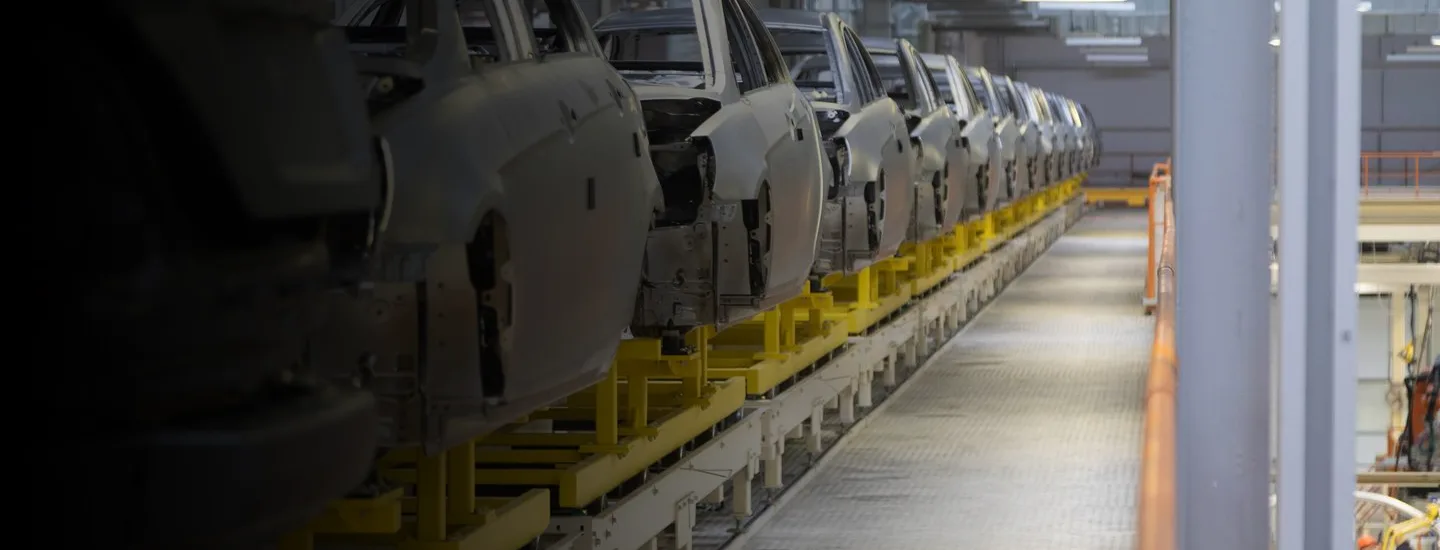
While the spotlight stays on Europe's transition to electric vehicles (EVs), the more consequential shift may be taking shape 14 kilometers to the south. Chinese carmakers and suppliers are turning Morocco into a strategic gateway to the European market—and moving fast.
Over the past five years, the global automotive industry has been reshaped by the rise of Chinese original equipment manufacturers (OEMs) and suppliers. One of the clearest expressions of that shift can be seen in Morocco. Since the pandemic, Chinese companies have announced more than 10 billion euros of automotive investment in the country—with a marked acceleration since 2023 establishing Morocco as their leading automotive investment destination among the world's best-cost manufacturing hubs.
For European OEMs and suppliers, this is more than a distant industrial-policy story. It is a competitive and strategic development taking shape on Europe's doorstep.
An investment surge, led by China
Morocco now ranks second only to Mexico for automotive foreign direct investment among major best-cost hubs. For Chinese automotive investment specifically, it ranks first—ahead of peers such as Hungary, Poland and Turkey. What stands out is not only the scale but the speed: Chinese capital has moved into Morocco faster and with more intensity than investment from any other origin, with annual inflows climbing sharply from the depressed COVID-19 years to record levels in 2025.
Beyond batteries: a full value chain takes shape
The most visible project is Gotion High-Tech's battery gigafactory in Kenitra, a €6 billion-plus investment with a planned capacity of 100 GWh (20 GWh confirmed in phase one). Volkswagen's roughly 25% stake in Gotion sends its own signal to European investors: Morocco is becoming a relevant node in the emerging global battery ecosystem.
But Chinese investment reaches well beyond cells. A growing cluster of suppliers is building out the wider value chain:
Why Morocco?
Several structural advantages make Morocco compelling—and not only for Chinese players:
Around 90% of Morocco's automotive exports already flow into Europe, mainly to France, Spain, Germany and Italy. This orientation is likely to persist and even deepen over the coming year.
What it means for the European industry
The strategic parallel is hard to miss: Morocco could become for Europe what Mexico has become for North America—a low-cost, tariff-advantaged production and export platform on the edge of a major market.
The implications for European OEMs and suppliers are twofold. On one hand, Morocco offers a genuine nearshoring opportunity: shorter, more resilient supply chains at a moment of geopolitical fragmentation. On the other hand, the build-up of Chinese EV and battery capacity so close to Europe raises competitive pressure—allowing Chinese players to improve their cost position and navigate around trade barriers.
The bottom line
China has quietly become a primary engine of Morocco's automotive build-out. Beginning with tires and traditional components, it is increasingly anchored in a full EV and battery ecosystem. For European players, understanding who is investing, where, and why is no longer optional.
To learn more about Morocco’s automotive investment landscape, the emerging EV value chain, and the implications for the European industry and what it means for your business, get in touch with Dr. Xing Zhou, Anass Sabir, Abdelaziz El Otmani or Benjamin Tauber.