
Steve Scales, Jr.
Partner & Managing Director - New York

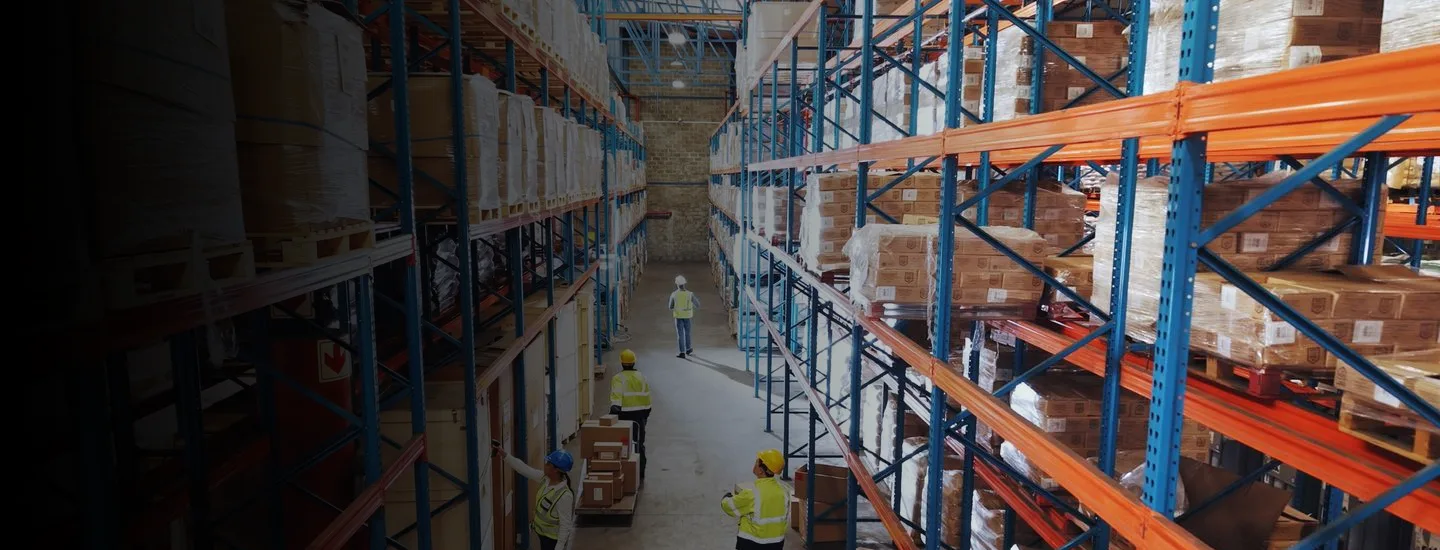
Don’t let supply chain headlines distract you from opportunities in your own backyard
Logistics costs are on fire (again). Importers are getting squeezed on both ends of the supply chain. Freight coming into the country faces a complex tariff landscape and escalating ocean costs. On the outbound side, the freight downturn is officially over. It’s time to dial in one of the remaining places where companies have some control: warehousing.
In the background, freight costs are on a steady march upward: the Logistics Managers' Index was up 2.7 points to 92.7 in September (highly inflationary) as truckload rates moved near record highs. Less-than-truckload (LTL) rates are up 5.4% year-over-year, and last-mile delivery costs were up 12% YoY. The cherry on top is an expected crunch as tariffs bite in the fourth quarter of 2026.
In 2025, warehousing was a relief valve for companies getting out in front of new tariffs and proactively building inventory. While some of the tariff noise has dampened, the costs of holding excess space and inventory continue to rise.
Rising wages: Warehouse wages (which account for between 45 and 57% of operating costs) have risen more than 5% year over year from $25.55 to $26.87 (per the Bureau of Labor Statistics), forcing retailers to choose between margin-eroding wage increases or expensive ‘big bets’ on automation investments that require infrastructure upgrades.
Fixed-cost headwinds: Net absorption is up ~105M sq ft in Q3 2026, the highest quarterly total since 2022. Average asking warehouse rents are up nearly 4% YoY from $10.77 to $11.16 per sq ft, while national vacancy rates have fallen 20 bps YoY (per CBRE).
AlixPartners’ 2026 Home Delivery Report found that 73% of retail executives are pursuing Distribution Network Optimization to improve cost and service. Before shippers execute strategic and costly network optimization, it’s critical to understand and extract value from the existing operation. This prevents leaders from falling into the trap of designing long-term strategy based on current inefficiencies.
Tariffs and freight costs have understandably dominated board-level supply chain conversations over the last couple years. Lurking in the P&L are persistent fulfillment costs, often driving between 5 and 15% of sales. So, it’s time to tighten the screws on warehousing strategy, from inventory placement to labor management.
This requires a deeper assessment of performance than basic KPIs provide. Performance management must link warehouse results to decisions made by operations, planning, merchandising, and finance teams, with clear expectations and ownership from frontline supervisors to senior leadership.
The key is to make accountability for cost and service part of everyday management, rather than an activity that ends with the improvement program. Start by getting back to basics.
Once you have a sense of the decisions that leaders need to make, you can select measures suited to the operation. The examples below illustrate the thinking, rather than prescribe a standard scorecard.
Cost: Are costs changing for the right reasons?
Track cost within the context of work complexity. Distinguish changes in volume, mix, and input prices from execution issues, recognizing that fixed commitments do not immediately flex with demand.
Example: Total cost per unit vs. forecast. Don’t mistake overall favorability for efficiency. Understand where opportunity exists, particularly if volumes are down relative to expectations.
Labor: Is staffing keeping pace with the work?
Pick efficiency doesn’t tell the whole story around your labor base and task complexity; investigate support time, waiting, rework, and other ancillary hours before assuming high productivity = optimal cost.
Example: Variable cost per unit relative to channel mix. Map this metric against the forecast to unwind what may be driving cost changes and what opportunities remain.
Service: Are four-walls incentives aligned with cost targets?
Operations teams are often handed KPI targets that are influenced by other business functions but don't factor in the impact on labor efficiency. Share four-walls KPI targets with cross-functional teams to ensure end-to-end alignment.
Example: Many shippers emphasize click-to-ship timing due to pressure from customer-service teams. Review impact on labor productivity and wave strategy to ensure the right balance between service and cost.
Along with a solid analysis of weaknesses in the system, keep an eye out for alarm signals such as:
DC costs beat forecast, but outpace volume trends on a cost per unit basis
Pick rates improve while total hours worked increase
Reported service metrics improve while ship backlogs grow
Exception transfers and overflow costs persist
Our clients see the most success when they connect operating processes and performance to decisions throughout the organization, with clear ownership and management practices that sustain improvement after the initial program—our approaches to this are well-established.
Connect operations to business priorities: We translate cost and service goals into process-level measures and a shared performance view for frontline teams, site leaders, and executives. We clarify the implications of labor, inventory, and capacity choices, challenging unnecessary handling and fixed-cost commitments rather than accepting them in the baseline.
Clarify decisions and accountability: We establish decision rights, cross-functional ownership, and escalation paths so performance discussions lead to action. Leaders can see who will address each gap, what support is needed, and whether the action improved results.
Build lasting client capability: We work alongside management to implement the changes, coach teams in diagnosing performance gaps, and establish follow-through in day-to-day management. The aim is for client leaders to own the targets, corrective actions, and continued improvement.
Validate the benefit: We establish clear success metrics, owners, and targets. Progress is monitored consistently and objectively, then shared to create visibility across stakeholders.
Freight costs are climbing, tariffs are persisting, and labor economics are shifting in ways that leave no room for operational slack.
The retailers and logistics operators winning in this environment aren't necessarily the ones with the newest technology or the flashiest AI tools. They're the ones who have woven warehouse performance into the fabric of how decisions get made across the business. They've connected operations to strategy, clarity to accountability, and measures to action.
The good news is that achieving this takes a steady supply of discipline, not a complete overhaul.