
Insights
Product management imperatives for cloud transformations


In today’s rapidly evolving technological landscape, the traditional boundaries of technology products and services are being transformed by XaaS – or “Everything-as-a-service” – business models. XaaS now serves as the preferred consumption model for software and tech-enabled applications. XaaS refers to the delivery of various offerings over the internet for a recurring subscription fee. Common XaaS examples include Software-as-a-Service (SaaS), Infrastructure-as-a-Service (IaaS) and Platform-as-a-Service (PaaS). XaaS model provides several benefits for both customers and vendors of technology. Customers enjoy lower IT costs, higher levels of flexibility and scalability, and faster access to advanced technology. Vendors, on the other hand, benefit from increased revenue predictability, stronger customer relationships, and faster time-to-market.
Successful XaaS transitions can bring significant valuation increases for enterprises. While enterprises start their XaaS journey with product transitions, it is only one part of the transformation. Realizing full potential of XaaS can require a complete a business and operating model change for enterprises. At AlixPartners, we help clients across industries complete XaaS transformation through assessment, careful planning and disciplined execution with a focus on profitable growth.
With SaaS, software applications are hosted on the cloud and provided to end customers over the internet. Users can access the software through a web browser, eliminating the need for installation or maintenance.
IaaS provides companies with fundamental IT infrastructure components such as servers, storage, and networking. This allows customers to deploy and manage virtualized IT resources on-demand, scaling up or down as needed.
PaaS provides a platform for developers to build, deploy, and manage applications without the need to worry about infrastructure. It offers development tools, middleware, and database management systems.
STaaS provides scalable and flexible storage solutions to businesses, eliminating the need to maintain on-premises storage infrastructure.
SECaaS offers security solutions on a subscription basis, providing businesses with protection against cyber threats, data breaches, and network vulnerabilities.
DBaaS offers database management and hosting services in the cloud. Users can access and manage databases without dealing with the physical hardware or software installation.
XaaS is one of our key transformation pillars in the tech industry. We recently conducted a detailed XaaS business model transformation study from which we derived the following key insights:
companies reviewed
companies analyzed in detail to study the effect of XaaS transformation on revenue and valuation
It typically takes 4 to 6 years for a XaaS transformation, depending on the starting point.
However, given that many competitors are already operating full XaaS models, there is a growing need for enterprises to accelerate their own XaaS transformation.
Revenue multiple increases from 2x-4x of revenue to 5x-7x after a successful XaaS transformation.
Despite lower valuations in 2023, profitable XaaS companies have continued to outpace the market.
Valuation multiples tend to maximize after the transformation achieves 80%+ revenue rotation to recurring revenue (ARR).
Faster pivot to recurring revenue can accelerate enterprise valuation.
Valuation increase is highly correlated to continued revenue growth post transformation.
XaaS transformation must enable market expansion and growth, after initial slowdown due to changes in revenue recognition.
XaaS transformations need to maintain steady or improving EBITDA margins to end with increased valuation.
Successful transitions can improve EBITDA margins by 2 to 3% on average through operational discipline and efficiency improvement.
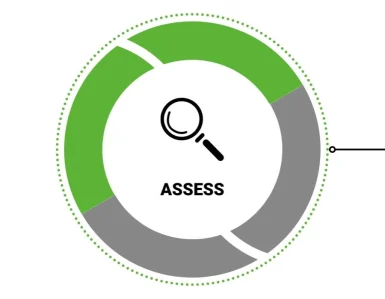
A $3B - $4B global talent acquisition company engaged AlixPartners to design and implement a multi-year growth strategy, including business transformation from selling large end-to-end offerings to a modular, digitally integrated model.
We designed and implemented a new product management function, developed a novel go-to-market strategy that protected the core business, and redefined delivery operations to support several new recurring digital revenue streams.
We conducted a series of innovation workshops to identify, build, and launch differentiated digital products and rationalize value propositions across the enterprise product portfolio value propositions.


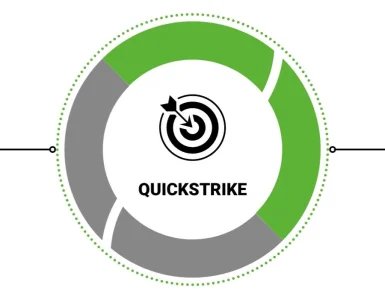
A $2 - $3B multi-cloud data management company engaged AlixPartners to transform its revenue model from perpetual licensing to subscription and SaaS to improve valuation.
We established a Subscription Transformation Office and Cloud Subscription Office to drive the program, design products/offers, advise on pricing and go-to-market, and manage the digital transformation to support the new model.
We enabled the execution of subscription and cloud-based SaaS transactions at scale by implementing system and process enhancements.
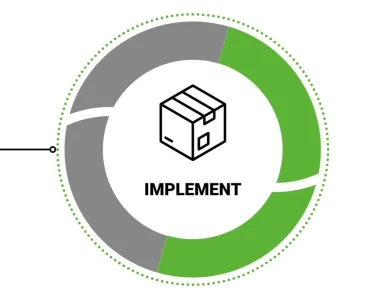
A $3 - $4B US enterprise software company engaged AlixPartners to design and implement new GTM strategy to accelerate their business.
The enterprise product suite was sold via an on-premise perpetual license model and had varying degrees of success across industries.
We developed transformation roadmap and product-specific strategies to SaaS models enabling variable cost optimization and enhanced customer flexibility.
We migrated company owned data centers to fit-for-purpose cloud environments.
We developed new engineering capabilities to support product management, business operations, and optimized customer experiences.