

Jessie Gertz
Director - Los Angeles


Highlights from AlixPartners’ and Lamb Weston’s session at the POI 2026 Spring Summit
Consumer products companies have invested heavily in data, tools, and dashboards—yet many are still not seeing the commercial impact they expect. In a recent conversation at the POI Summit, Kim Cupelli, SVP Retail, Marketing, Insights and Innovation at Lamb Weston, and I reflected on the transformation we led together and why the challenge is less about analytics capability and more about how insights are used in everyday customer conversations.
We described a familiar scenario:
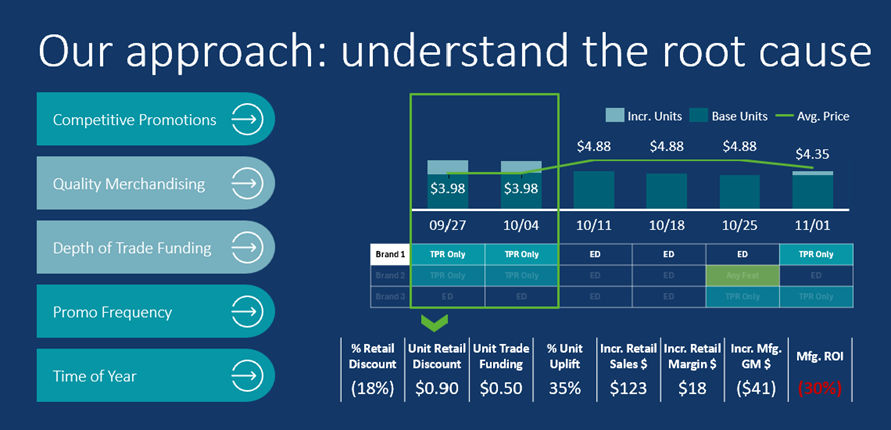
What appears to be a data-driven decision becomes value-destructive because it ignores competitive actions, consumer behavior, and the retailer’s broader objectives.
Consistent with the company's Focus to Win strategy, the Lamb Weston commercial team needed to rapidly reframe how it planned, analyzed, and engaged with retail customers.
The Lamb Weston model used in this case, supported by AlixPartners, focused on three practical shifts that can be replicated by other consumer products companies.
1. Understand the big picture
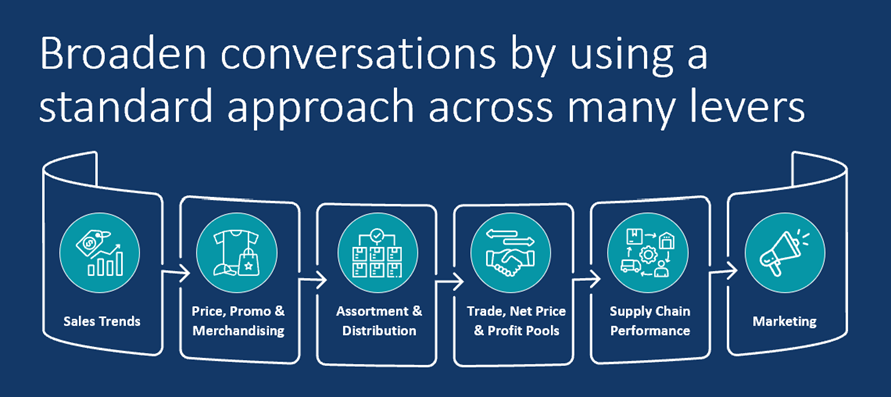
Rather than responding to one-off requests around new items or incremental promotions, we helped the team reorient around how buyers manage their categories: sales trends; price, promotion, and merchandising; assortment and distribution; trade and net profit; and marketing investment. By consolidating these levers into a coherent view, account teams could discuss the role of the full portfolio and the category's economics, not just the next deal.
2. Democratize insights through fit-for-purpose tools
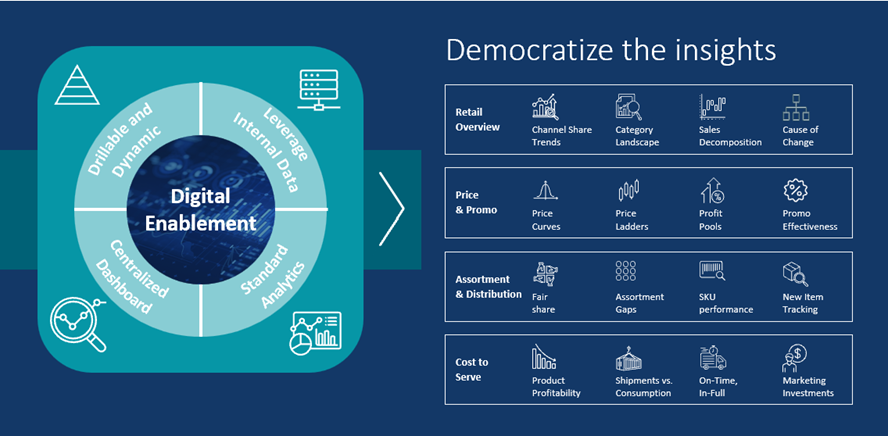
The underlying data and dashboards already existed but were fragmented, slow, and difficult for frontline teams to use. Lamb Weston and AlixPartners codeveloped an integrated environment that brought together syndicated data, internal trade and P&L views, and performance analytics into an “all-in-one” commercial cockpit, including customer-level P&Ls. Co-creating these tools with Kim’s team ensured they reflected how sales and category leaders really work—and that Lamb Weston could own and evolve them after our engagement. The tools also highlighted partnership opportunities for Lamb Weston to improve performance with select customers.
3. Embed governance and capability for sustained impact
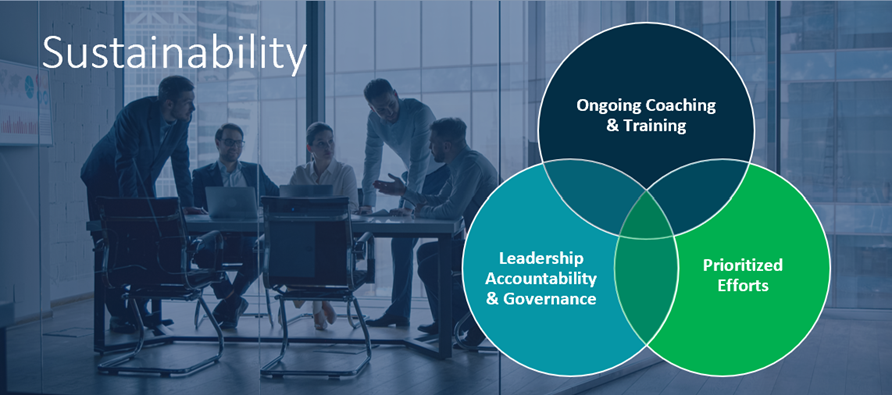
A cross-functional super-user group, targeted training, and clear expectations on which analyses to use monthly, quarterly, and annually ensured the tools were adopted in day-to-day selling and joint business planning. Together with Kim and her retail leadership, we also introduced governance around trade approvals and investment guardrails, shifting decisions away from ad hoc, internally focused negotiations (“last year we gave 8¢, this year 5¢”) toward structured, insight-led choices grounded in customer and category economics.
From our work together, we identified three lessons that resonate broadly across the sector.
As Kim described it, Lamb Weston's ambition is to consistently be seen by retailers as a trusted, insight-led partner. From my perspective as her partner in this journey, the critical shift was moving from isolated analytics to shared, actionable insight—equipping people on both sides of the table to use data to create better, more balanced customer outcomes.