
Lian Hoon Lim
Partner & Managing Director - Singapore

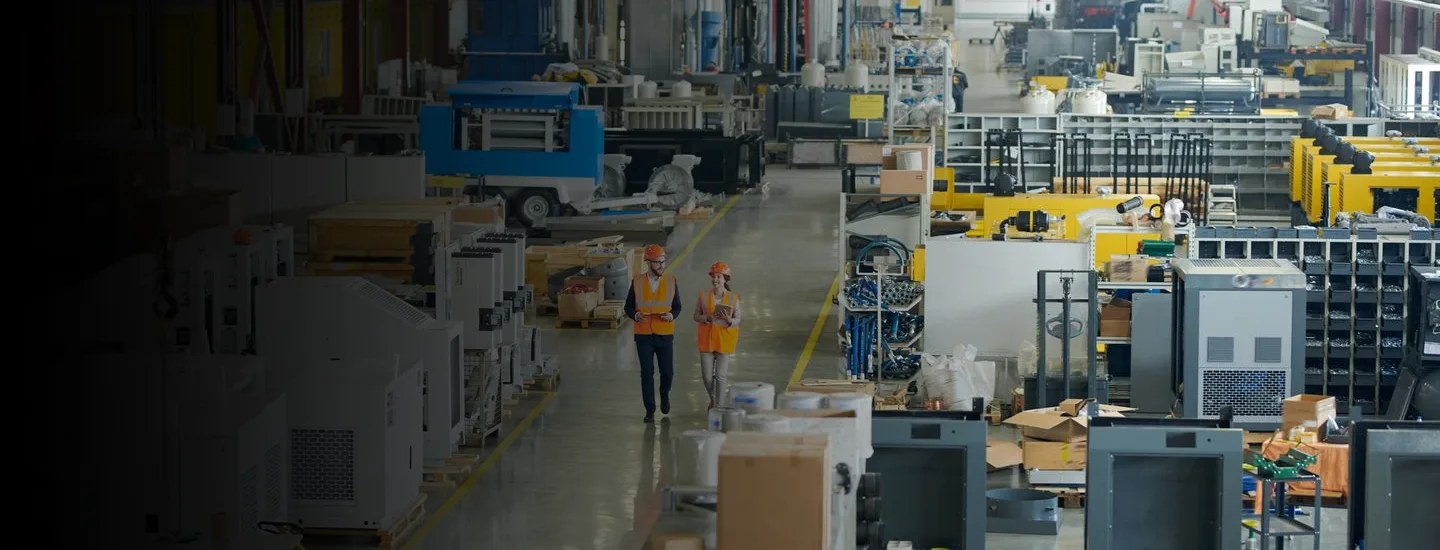
For lenders with manufacturing exposure in Asia, protecting loans starts on the factory floor.
Lenders across Asia are already watching their manufacturing books closely, and with good reason.
After a year of tariff and cost headlines, it comes as no surprise that manufacturers are under pressure, but the headline figures are still confronting. In China, the official factory activity PMI dropped back into contraction at 49.0 in April 2025—its weakest reading in 16 months—and by October, shipments to the U.S. were more than 25% lower than a year earlier.
In any portfolio, lenders will naturally prioritize borrowers who show obvious signs of stress: those seeking extensions, covenant relief, or new money. But some of the sharpest losses come from exposures that are harder to spot: manufacturers that still look healthy on the surface, but with revenue built on yesterday’s pricing, yesterday’s volumes, and shrinking economics on the factory floor.
Avoiding being blindsided by those “healthy” exposures isn’t a question of more financial analysis; reading the books more closely won’t help. The key is tuning into the right warning signals at the plant.
For lenders, three should be top of mind during every visit:
Red flag #1: Busy factory, disappearing margins
The Potemkin-village effect—a reassuring façade over a weak reality—can be all too easy to miss. Visit the factory, and you see the lights on, lines running, trucks moving, and headcount apparently intact. The site-visit report reads “business as usual”.
First impressions may not stand up to sharper questions. A walk-through needs answers in three critical areas:
Red flag #2: Trade finance looks great—until volumes fall
Export manufacturers typically stack several forms of working-capital finance: purchase-order funding for raw materials, supplier credit, and factoring or other trade-finance tools on the receivables. In good times, these facilities can fund most of the working-capital cycle and look perfectly reasonable.
The fragility appears when volumes fall and the total amount of trade finance available on new orders shrinks with them. The residual amount that was funding the previous higher level of activity must be repaid or refinanced from elsewhere. For a borrower already under margin pressure, that repayment gap can trigger a liquidity squeeze long before P&L shows a loss.
The clarity and realism of the answers can reveal more than several years of clean audit opinions.
Red flag #3: “It’ll bounce back” as core plan
The third and final warning sign is the hardest to quantify and the easiest to overlook or underestimate: management psychology. In many stressed manufacturing situations, performance decline isn’t a steady slide; it is a dip followed by a plateau at a lower level, often presented by management as a temporary cyclical effect that will reverse over time.
In the current environment, that assumption carries substantial risk. With tariffs, changes in buyer sourcing, and shifting demand patterns across different end markets, what once looked cyclical can turn out to be a structural shift in factory-level economics. But headline trade numbers may remain strong throughout: China, for example, ended 2025 with a record trade surplus of nearly $1.2 trillion as exporters redirected sales to alternative markets while U.S.-bound volumes fell. The catch is that many of those new flows were on thinner margins than the business they replaced. It becomes easy for a founder to point to stable or growing revenue and argue that “things are fine”, even when individual plants, products, or customers are shipping at a loss rather than generating value.
Borrowers who can’t do that are effectively asking you to fund hope.
Spot the restructuring case early
By the time you’re renegotiating the facility, much of the value may already be gone. Restructuring tools—maturity extensions, covenant resets, and amended amortization schedules—can buy time, but they cannot repair margin, utilization, or working-capital strain. Recoveries tend to be strongest where lenders insist early on a clear operational plan that aligns production, pricing, costs, and capital structure with the new trading reality.
The first insights into that reality come from the floor, not the accounts. Learning to read shift usage, customer mix, terms, stock, trade-finance flows, and management behavior—alongside the numbers—is now a core part of protecting recoveries. For lenders with meaningful exposure to manufacturers in Asia, including China, the value at stake in probing beyond the financial statements has never been greater.
AlixPartners helps lenders get ahead of factory-level stress, bringing expert, on-the-ground insight into true plant performance, liquidity resilience, and recovery risk while working side by side with manufacturers to stabilize operations fast and turn a sliding asset back into a performing one.
If you’d like to explore practical next steps, please contact:
Lian Hoon Lim – Partner and Managing Director
Una Ge – Partner and Managing Director
Dick Liu – Director