
Lian Hoon Lim
Asia Leader, Turnaround & Restructuring, Partner & Managing Director
Singapore
Lian Hoon Lim
Partner & Managing Director - Singapore

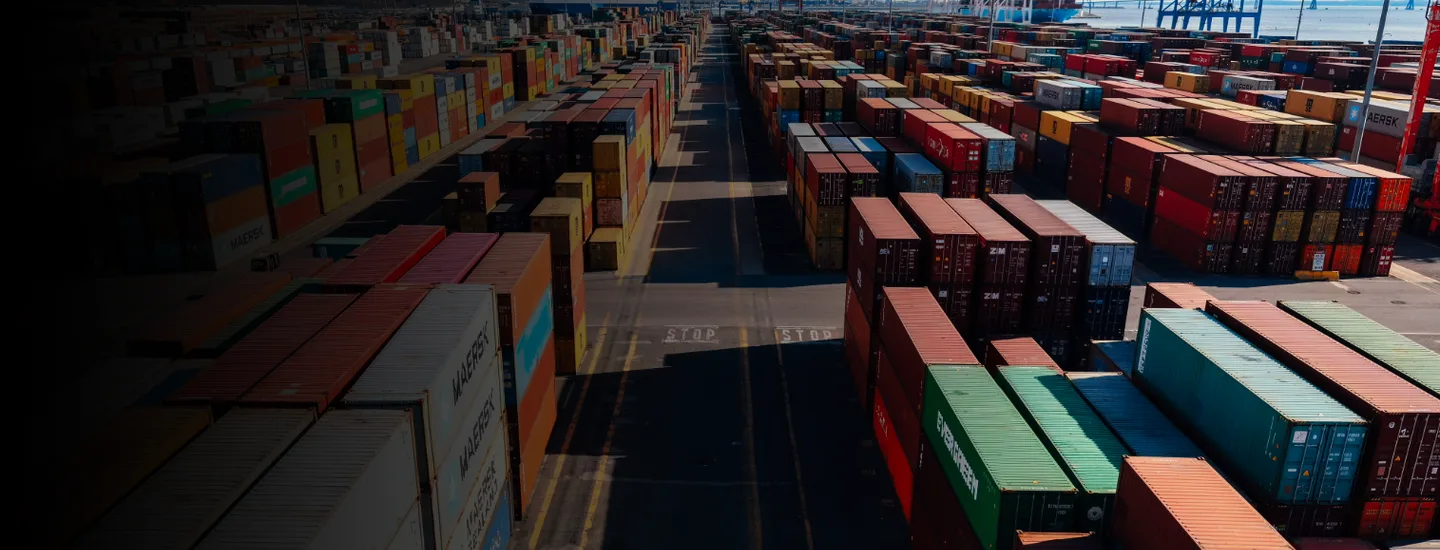
Signing off on a new footprint—or underwriting a costlier set of vulnerabilities?
As tariffs reshape global manufacturing, China+1 will loom large in lending decisions for the next couple of years. When a second site needs funding, lenders must judge whether they are backing real resilience—or a fragile stopgap. A new offshore plant, poorly thought through, can strain balance sheets and liquidity and create nasty surprises for those committing capital.
From one full plant to two half-empty
On paper, diversifying manufacturing away from China to reduce or avoid tariff exposure addresses several issues at once, especially U.S. tariff exposure and customer concerns on geographic concentration. In reality, one fully utilized plant can easily become two partially utilized plants, and tariff savings get swallowed by lost operating leverage.
Two factories often mean duplicated fixed costs: two management teams, two maintenance crews, two sets of overheads. That’s a cost-structure problem before it’s a utilization problem. Lower utilization is survivable if those overheads have been brought down. But unless there’s a credible route back to a leaner cost structure—for example, by shrinking or repurposing the original plant—overall margins become diluted just as financial leverage increases.
The legacy China site is where the story usually becomes real:
If the legacy footprint is not clearly right-sized, financing ends up funding the overlap: two cost bases chasing the same revenues, which hardly makes for a resilient borrower.
Does the new location have the ecosystem to stand on its own?
A new factory can be built quickly, but new suppliers, tooling support, logistics services, and people who know how to run the processes from day to day take much longer to put in place. Where that support is thin on the ground, the China+1 site often begins as a bolt-on final-assembly outpost, still relying on China for critical sub-assemblies, parts, know-how, and problem-solving. From day one, “component tourism” is built in: key inputs travel long distances, requiring more handling, more customs touchpoints, and higher costs.
That trade-off is acceptable while the new plant is still learning: teams need training, processes need tuning, and early production often comes with lower yields, more scrap, and rework. Labor may be cheaper, but in popular destinations—Mexico and Vietnam are the obvious examples—capacity, land, and skilled labor are already in short supply. In this first phase, lead times, working capital, and costs usually stretch, and quality is often uneven. Very often, the path to break-even ends up much longer than the original capex case projected.
To better understand the risks of moving, lenders (and investors, too) should ask for specific information:
Stretching working capital as well as capex
A second plant stretches the balance sheet twice over: first through capex, then through working capital. In the early years, a new site rarely runs smoothly. Extra safety stock is needed to cover unstable yields and new suppliers, and component tourism slows order-to-cash. On a true all-in basis, the plant usually runs at weaker profitability until volumes and quality stabilize. The extra inventory ties up cash that could otherwise service debt and squeezes covenant headroom. In practice, lenders are often betting on the post-ramp-up picture, but the business still has to get there without breaching its limits.
A more realistic approach would be explicit about:
Projections need to mirror the ramp-up as it is likely to happen, not as a steady-state average. If the case only works once the plant reaches mature efficiency, lenders are effectively being asked to rely on the best outcome, not the base case.
The critical question set for lenders
In a credit committee, four questions usually separate a resilient case from a balance-sheet stretch:
Fund strength, not stretch
For many borrowers, some relocation is unavoidable. China+1 is becoming a structural feature of global manufacturing, rather than a short-term response.
The challenge is that once capital and working capital are committed, fixed costs do not always come out as planned; industry ecosystems take time to grow; and liquidity may be tested long before steady‑state benefits appear. Where those realities are recognized and funded, diversification can strengthen the business. Where they are not, risk tends to be redistributed rather than reduced.
Authors
Dick Liu is a Director in Performance — Manufacturing and Operations at AlixPartners.
Lisa Hu is Partner & Managing Director — Operating Model and Organizational Transformation at AlixPartners.
Lian Hoon Lim is Co-Head of Asia Turnaround & Restructuring at AlixPartners.
Una Ge is Partner & Managing Director — Turnaround & Restructuring at AlixPartner